You glance at the pump, watching the numbers climb. Forty, fifty, sixty dollars. A familiar pang of frustration hits. Could your car be getting better mileage? The trip computer says 28 MPG, but is that accurate? Knowing how to calculate your car's fuel efficiency isn't just a math exercise—it's the first step to taking control of your fuel costs and understanding your vehicle's real-world performance. Forget the guesswork. This guide will walk you through the exact formulas, show you where most people mess up the calculation, and give you concrete strategies to make that full tank last longer.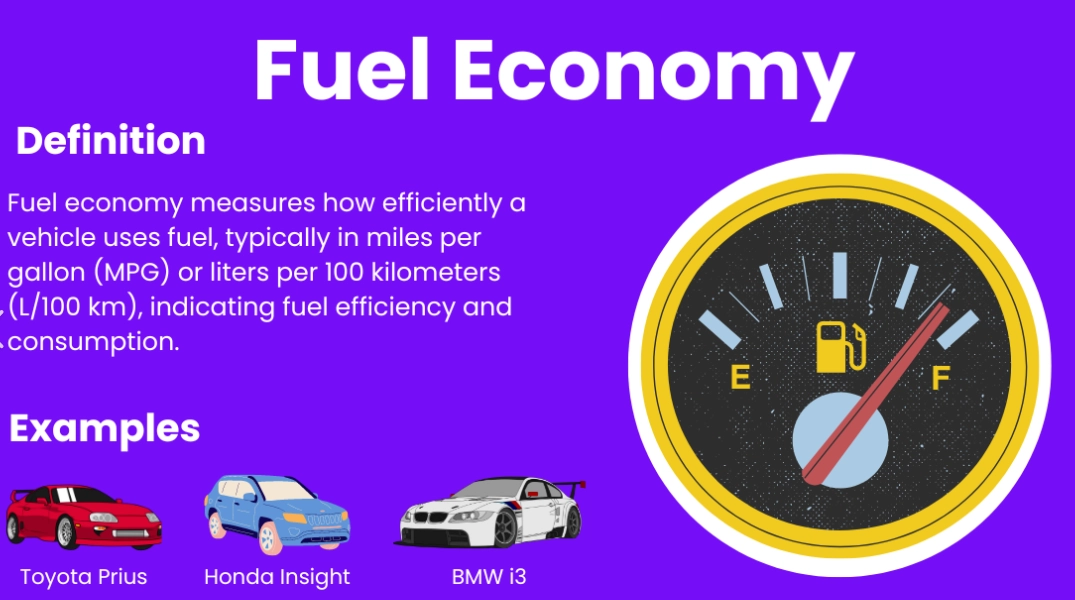
What You’ll Learn in This Guide
- The Core Fuel Efficiency Formula (And Two Common Mistakes)
- How to Calculate Your MPG or L/100km: A Step-by-Step Walkthrough
- What Really Affects Your Fuel Economy? Beyond the Formula
- Actionable Ways to Improve Your Fuel Efficiency
- Pro Tips for Accurate Tracking and Long-Term Savings
- Your Fuel Efficiency Questions, Answered
What is the Fuel Efficiency Formula? (And the Two Most Common Mistakes)
At its heart, the fuel efficiency formula is simple division. You take the distance you've traveled and divide it by the amount of fuel you used to cover that distance. The complexity—and where people get tripped up—comes from the units.
There are two dominant systems:
Here's the first mistake almost everyone makes: they trust the dashboard readout completely. Your car's trip computer is an estimate, often an optimistic one. It calculates based on short-term engine data and can be thrown off by idling, aggressive acceleration, or even tire pressure. The only way to know your true, average efficiency is to do the math yourself over multiple tanks.
The second mistake is inconsistent measurement. Did you fill the tank to the same level each time? A “full” tank can vary by a gallon or more if you stop the pump at the first click versus trying to squeeze more in. For accuracy, you need a consistent routine.
Quick Unit Reference: If you're comparing a US-made car (MPG) to a European review (L/100km), it can be confusing. Remember, they are inversely related. A higher MPG is good. A lower L/100km is good. Converting between them isn't straightforward division; you need a specific conversion factor. Many online calculators from sources like the U.S. Environmental Protection Agency (EPA) can handle this for you.
How to Calculate Your MPG or L/100km: A Step-by-Step Walkthrough
Let's follow a real-world example. Meet Alex. He drives a 2018 sedan and wants to know his actual MPG.
Alex's 4-Tank Method for Accuracy
Step 1: Fill Up Completely. Alex goes to his usual gas station. He inserts the nozzle, sets it to auto-fill, and waits until it shuts off automatically. He does not try to “round up” to the nearest dollar. He resets his trip odometer to 0.
Step 2: Drive Normally. He drives for his regular week—commute, errands, a short highway trip. He doesn't change his habits for this first tank. The goal is a baseline.
Step 3: Fill Up Again, Record the Numbers. Back at the same pump, he fills until auto-shutoff. His trip odometer now reads 317.5 miles. The pump shows he took 11.8 gallons.
Step 4: The Calculation.
MPG = Miles Driven ÷ Gallons Used
MPG = 317.5 ÷ 11.8
MPG = 26.9
Alex's dashboard showed 28.4 MPG. His manual calculation reveals he's actually getting 1.5 MPG less. Over a year, that difference adds up.
Step 5: Repeat for Confidence. One tank isn't enough. Alex repeats this process for three more fill-ups. His results: 27.2, 26.5, 27.8 MPG. His true average fuel efficiency is around 27.1 MPG. This multi-tank average smooths out anomalies from different driving conditions.
| Fill-up | Miles Driven | Gallons Used | Calculated MPG | Trip Computer MPG |
|---|---|---|---|---|
| #1 | 317.5 | 11.8 | 26.9 | 28.4 |
| #2 | 305.2 | 11.2 | 27.2 | 28.1 |
| #3 | 291.8 | 11.0 | 26.5 | 27.7 |
| #4 | 332.1 | 11.9 | 27.8 | 29.0 |
| Average | 311.7 | 11.5 | ~27.1 | 28.3 |
What Really Affects Your Fuel Economy? Beyond the Formula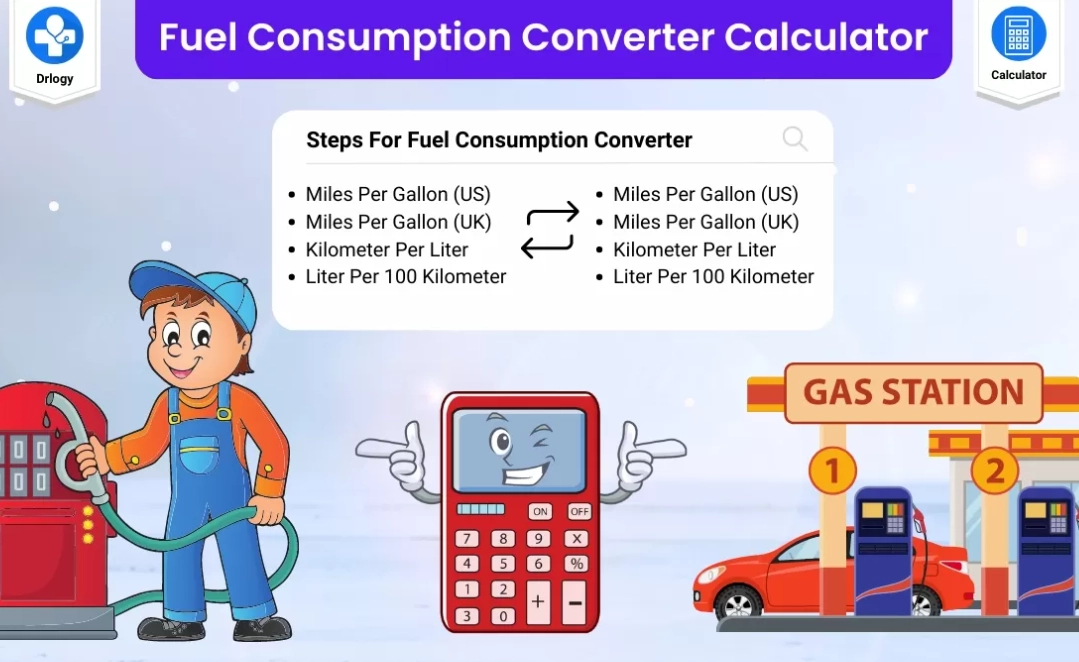
The formula tells you the “what.” Understanding the “why” requires looking under the hood (and at your driving habits). These factors move the needle more than you think.
Driving Behavior is King. This is the biggest variable. Jackrabbit starts and hard braking can lower your highway mileage by 15-30%. Speeding on the highway matters too. According to the U.S. Department of Energy, gas mileage usually decreases rapidly at speeds above 50 mph.
Vehicle Maintenance is Non-Negotiable. A dirty air filter chokes the engine. Under-inflated tires create more rolling resistance—I've seen a single tire 5 PSI low drop MPG by a noticeable half-point. Using the wrong grade of motor oil can increase internal friction. These aren't minor details; they're direct drains on your tank.
Environmental and Load Factors. Cold weather hurts efficiency because the engine takes longer to reach its optimal temperature. Running the A/C can reduce MPG, but so does driving with windows down at high speed due to drag. Carrying an extra 100 pounds of junk in your trunk? That's costing you.
Most people focus on the car itself. But I've found that an honest look at your own driving style often reveals the biggest opportunity for improvement.
Actionable Ways to Improve Your Fuel Efficiency
Knowing your number is step one. Improving it is step two. Here’s how to turn that formula result into a bigger one (for MPG) or a smaller one (for L/100km).
Master the Pulse-and-Glide Technique (on the Highway). This isn't hypermiling extremism. It's simply using cruise control judiciously. On gentle hills, instead of letting the cruise control mash the throttle to maintain speed uphill, sometimes it's more efficient to let your speed drop slightly (by 2-3 mph) on the climb and regain it on the descent. The constant throttle struggle wastes fuel.
Become a Tire Pressure Hawk. Check pressures monthly when tires are cold. Use the PSI number on the driver's side door jamb, not the max pressure on the tire sidewall. This is free, takes 5 minutes, and is arguably the easiest win.
Plan and Combine Trips. A cold engine is inefficient. Several short, separate trips where the engine never fully warms up can burn 50% more fuel than one longer trip covering the same total distance. Batch your errands.
Lighten the Load and Reduce Drag. Take that roof box off when you're not using it. A loaded roof rack can cut fuel economy by up to 25% on the highway. Clean out your trunk. Every pound matters, especially in city driving with frequent stops.
Pro Tips for Accurate Tracking and Long-Term Savings
After a decade of tracking my own cars and advising others, I've settled on a system.
Use a Dedicated App or Old-School Notebook. Don't rely on memory. Apps like Fuelly or even a simple note on your phone to record odometer reading, gallons/liters, and cost per tank. This creates a historical record. You'll see seasonal trends—your MPG will likely dip in winter—and you can instantly spot if a recent maintenance issue (like a new oxygen sensor) improved your numbers.
The “Sweet Spot” Myth. You'll often hear about a car's “sweet spot” speed for best mileage, usually around 45-55 mph. That's generally true, but the real pro tip is to focus on smoothness, not just speed. Maintaining a steady 65 mph with cruise control is often better than alternating between 62 and 68 mph manually.
When to Suspect a Mechanical Problem. If your meticulously calculated MPG suddenly drops by 10-15% or more without a change in driving conditions or season, it's a red flag. Common culprits: a failing oxygen sensor, stuck brake caliper, dirty fuel injector, or a misaligned wheel. The formula becomes a diagnostic tool.
Your Fuel Efficiency Questions, Answered
Why does my car’s trip computer show a different MPG than my manual calculation?
Trip computers are designed to be responsive, often showing instantaneous or short-term averages. They can be calibrated optimistically by manufacturers and are terrible at accounting for idling time. Your manual calculation over a full tank is the true average consumption. Trust the math you do at the pump over the dashboard display.
Is premium gas worth it for better fuel economy in a car that doesn’t require it?
Almost never. If your owner’s manual says “regular unleaded,” using premium offers zero efficiency or performance benefit. You’re paying 20-30% more per gallon for no return. The octane rating relates to knock resistance, not energy content. The only exception might be if you consistently hear engine knocking with regular, but that’s a separate mechanical issue.
 How much does using the air conditioning actually hurt my fuel economy?
It depends heavily on speed. In city driving, AC can reduce mileage by 1-4 MPG. On the highway, the penalty is less severe, maybe 1-2 MPG. Interestingly, at highway speeds (above ~45 mph), the aerodynamic drag from open windows is often worse than the load from the AC compressor. The rule of thumb: windows down in slow traffic, AC on recirculate for the highway.
I calculated my L/100km. What’s a “good” number?
It varies wildly by vehicle type. A modern hybrid might achieve 4.0-4.5 L/100km. A fuel-efficient compact sedan might be in the 6.0-7.0 range. A midsize SUV could be 8.5-10.0. A full-size truck might be 12.0 or higher. Don't just look at your number—compare it to the official rating for your vehicle from your country's regulator (like Natural Resources Canada). If you’re within 1-2 L/100km of that rating with mixed driving, you’re doing fine. If you’re significantly higher, revisit your driving habits and vehicle maintenance.
Do fuel additives or “magic pills” that claim to boost MPG work?
I’m deeply skeptical of any aftermarket product making dramatic claims. A quality top-tier detergent gasoline already has additives to keep injectors clean. If your engine is running poorly due to carbon buildup, a professional fuel system cleaning might help restore lost MPG, but it won’t boost you beyond the engine’s design efficiency. Save your money. The most effective “additives” are proper tire pressure and a lighter right foot.