Open any tech or auto site, and you're hit with another wave of electric vehicle news. A new battery "breakthrough" every week. Another automaker pledging an all-electric future. A policy change in some country you've never visited. It's exciting, but honestly, it's exhausting. After a decade of writing about this stuff, I've seen patterns emerge. Most of the noise is just that—noise. But buried in the headlines are signals that actually change what you can buy, how much you'll pay, and where you can drive.
Let's talk about how to read EV news without getting a headache.
What You'll Find in This Guide
What Are the Most Common Types of EV News?
Not all updates are created equal. I categorize them into three buckets based on their immediate impact on you, the potential buyer or owner.
| News Type | What It Looks Like | Why It Matters | Your Action |
|---|---|---|---|
| Product & Tech Launches | "New Tesla Model Y Refresh Announced," "Toyota Unveils Solid-State Battery Prototype," "Ford Cuts F-150 Lightning Price by $5,000." | Directly affects your buying options, specs, and upfront cost. This is the most tangible news. | Compare new specs/price with current models. Note release dates. Be skeptical of lab-only "breakthroughs." |
| Infrastructure & Policy | "Federal Government Announces New EV Tax Credit Rules," "Electrify America to Add 500 Chargers on I-95," "California Bans Gas Car Sales by 2035." | Changes the financial math and daily practicality of ownership. Often more impactful than a new car model. | Check policy eligibility (e.g., tax credits). Map new chargers against your common routes. Understand local regulations. |
| Market & Industry Trends | "Lithium Prices Drop 40%," "EV Adoption Rate Slows in Europe," "Rivian and Mercedes-Benz Form Charging Joint Venture." | Signals long-term direction, future costs, and company stability. Helps you time your purchase. | Informs a "buy now vs. wait" decision. Indicates which automakers are here for the long haul. |
Here's a personal example. Last year, news about revised U.S. federal tax credits (Infrastructure & Policy) was far more important to my neighbor than the announcement of a hypercar that goes 0-60 in 1.9 seconds. The policy news saved him $7,500 on a practical SUV. The hypercar news was just cool to look at.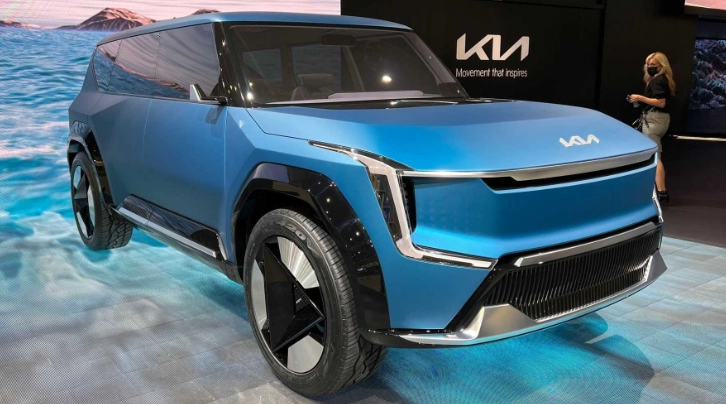
The Subtle Error Everyone Makes with Tech News
People get overly fixated on the maximum range number in any new EV announcement. "This one gets 350 miles!" That's a shiny object. The more critical detail, often buried in paragraph seven, is the charging curve. How fast does it charge from 10% to 80% on a public fast charger? A car that adds 200 miles of range in 15 minutes is infinitely more usable on a road trip than one with a higher max range but slower charging. I learned this the hard way on a long drive in an early EV—great range, but a 45-minute wait at a charger felt like an eternity. Always dig for the charging speed news.
How to Interpret EV News Like a Pro
Reading past the headline is a skill. Here’s my process.
Step 1: Check the Source. Is it an automaker's press release (marketing), a financial analyst report (speculative), or news from a technical publication like IEEE Spectrum or a government body like the U.S. Department of Energy (more factual)? The source tells you the intent.
Step 2: Look for Data and Specifics. Vague language like "game-changing" or "revolutionary" is a red flag. Real news has numbers: kilowatt-hours (kWh) of battery capacity, kilowatts (kW) of charging power, miles of range under a specific test cycle (like EPA), dollar amounts, and concrete timelines ("Q3 2024" vs. "coming soon").
Step 3: Ask "Who Does This Help or Hurt?" A news item about a new, cheaper lithium-iron-phosphate (LFP) battery benefits budget-conscious buyers. News about a luxury brand's $200,000 EV doesn't affect the mass market. This frames the update's relevance.
Let's apply this. Headline: "Major Breakthrough Doubles EV Battery Life!"
Source: A university lab's press office.
Specifics: The research paper mentions a cycle life of 2,000 charges in controlled conditions. No partner manufacturer. No production date.
Who it helps: Possibly no one for 5-8 years, if ever.
Verdict: Interesting for science, irrelevant for your next car purchase. File it away and move on.
Beyond the Hype: Trends That Are Reshaping the Road
Forget the daily churn. These are the underlying currents you should watch. They're the context that makes individual news stories make sense.
The Battery Cost Curve is Everything. Reports from BloombergNEF consistently show the price of lithium-ion battery packs falling over the long term. When you see news about a new mine opening, a recycling plant scaling up, or a new battery chemistry (like sodium-ion), it's all pushing on this one lever: cost per kWh. Lower battery cost means cheaper EVs with more range. This is the single most important trend. A 10% drop in battery pack cost is bigger news than three new SUV models.
Charging is Shifting from "Where" to "How Fast and Reliable." Early news was about the number of charging stations. Now, the quality of the experience is the story. Updates about Tesla's V4 Superchargers, Mercedes-Benz's high-power network, or the reliability ratings of major networks like Electrify America are crucial. A broken charger is worse than no charger. The news here directly impacts your confidence to take a trip.
Automakers Are Pivoting (Again). The wild rush to announce dozens of new EVs is meeting reality. We're now seeing news about delays (Ford pushing back some EV production), strategy shifts (GM reintroducing hybrids in North America), and partnerships (like the one between Rivian and Volkswagen). This isn't a sign of failure; it's a market maturing. For you, it means the companies that survive will have more robust products and service networks. News about these strategic moves is a health check for the brands you're considering.
One non-consensus point I'll make: the obsession with vehicle-to-grid (V2G) news is premature for most. Yes, it's a cool concept—your car powering your home. But the hardware, software, and utility regulations are a tangled mess. It's a headline-grabber, but for the next few years, focus on news about vehicle-to-load (V2L)—using your car to power tools or a fridge during a blackout. That's a useful feature you can actually get today.
Your Top EV News Questions, Answered
The electric vehicle news cycle isn't slowing down. But you don't have to be a passive consumer of it. By understanding the types of news, applying a critical lens, and focusing on the underlying trends, you can extract the signal from the noise. You'll make better decisions, avoid disappointment, and maybe even enjoy the ride a little more. Remember, most news is fleeting. The trends in cost, infrastructure, and real-world usability are what will get you where you're going.