Quick Guide
- Why Getting the Wiper Blades Size Right Is a Big Deal
- Your 3-Step Plan to Find Your Exact Wiper Blades Size
- The Quick-Reference Wiper Blades Size Chart (For Common Vehicles)
- Beyond the Number: Connectors and Blade Types
- Step-by-Step: How to Install Your New, Correctly-Sized Blades
- Questions You're Probably Asking (The FAQ)
- Wrapping It Up: Your Action Plan
Let's be honest. Buying wiper blades shouldn't feel like solving a riddle. You walk into an auto parts store, or worse, you're scrolling online, and you're hit with a million options. But the most basic question, the one that stops everyone dead in their tracks, is simple: what size wiper blades do I need? Get it wrong, and you're looking at a streaky, chattering mess that's worse than what you started with. Or worse, blades that smash into each other or hang off the edge of your windshield.
I've been there. I once bought a set that was just an inch too long. They worked... until they didn't. The passenger-side blade would catch on the edge of the windshield molding at the end of its sweep with a horrible *thwack*. It drove me nuts for a week before I figured it out.
So, let's cut through the noise.
This guide isn't about selling you a specific brand. It's about giving you the knowledge to confidently find the correct wiper blades size for your vehicle, the first time. We'll cover how to measure, where to look, the sneaky pitfalls, and even what to do if your car is a weirdo (some of them are). By the end, you'll be the person who knows their 26" from their 16", and why that half-inch difference actually matters.
Why Getting the Wiper Blades Size Right Is a Big Deal
It's not just about a clean swipe. Think of your wipers as precision tools. The engineers who designed your car didn't pick a random wiper blade size. They calculated the exact arc and coverage needed to clear your specific windshield's curvature and size for maximum visibility.
Use blades that are too long, and you risk:
- Arm Damage: The motor and linkage are designed for a specific weight and length. An overlength blade strains the system.
- Collision: The driver and passenger blades can hit each other in the middle, or the blade can hit the windshield frame or A-pillar.
- Poor Sealing: The blade can't maintain even pressure across the glass, leading to missed spots at the tips.
Use blades that are too short, and you're just cheating yourself:
- Reduced Visibility: You leave a huge, uncritical band of wet glass at the far edge of your wipe pattern. In heavy rain, that's a blind spot.
- Accelerated Wear: The blade might be forced to pivot at an extreme angle at the end of its travel, wearing out the frame or hinge points faster.
Safety First: The National Highway Traffic Safety Administration (NHTSA) consistently lists impaired visibility as a major factor in weather-related crashes. Your wipers are a primary safety system. Making sure they are the right size and in good condition isn't just maintenance; it's a safety check. You can read more about vehicle safety equipment from the NHTSA's official page on wiper systems.
So yeah, that little number stamped on the package? It's kind of important.
Your 3-Step Plan to Find Your Exact Wiper Blades Size
You have a few reliable paths to find your magic number. I recommend checking at least two methods to be sure.
Method 1: The Owner's Manual (The Boring, Foolproof Way)
I know, I know. Who reads the manual? But for this, it's the gold standard. Dig it out from your glove box (or find a PDF online). Look in the index or table of contents for "Wiper Blades," "Maintenance," or "Specifications." There, in black and white, it will list the exact length(s) required for your make, model, and year. It might even specify different sizes for the driver and passenger sides, which is very common. This is the manufacturer's official recommendation and your best starting point.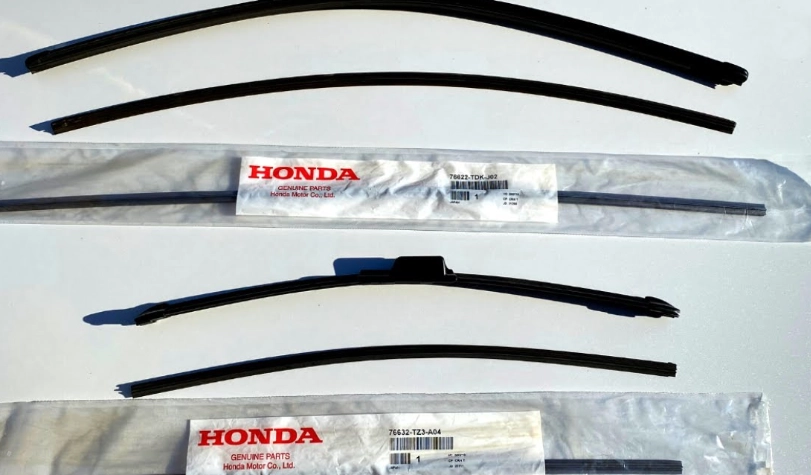
Method 2: Measure Your Existing Blades (The Hands-On Way)
This is the most common method, and it works great—if you do it correctly. Here's the detailed process most guides gloss over:
- Park on a flat surface and turn the car off. Engage the wiper service mode if your car has one (often done by quickly tapping the wiper stalk after turning ignition off). If not, carefully lift the wiper arms away from the windshield until they lock in the upright service position.
- Find the true measurement point. Don't measure the entire wiper assembly. You want the length of the rubber squeegee element itself or the metal/plastic frame that holds it (the "blade"). Ignore the plastic adapters or connectors at the end that latch onto the wiper arm.
- Use a flexible measuring tape. A rigid ruler won't follow the slight curve of the blade. Place the tape at one end of the rubber squeegee, follow its curve to the other end, and note the measurement in inches. The Automotive Maintenance and Repair Association (AMRA) has a good visual guide on proper measurement technique in their education resources.
- Round to the nearest whole inch. Wiper blades are sold in even-inch increments (16", 18", 20", etc.). If you measure 25.5 inches, you need a 26-inch blade. 24.25 inches? That's a 24-inch blade.
Method 3: Use an Online Size Lookup Tool (The Easy Button)
Every major auto parts retailer and wiper blade manufacturer has one. You enter your vehicle's year, make, model, and sometimes trim level. It spits out the recommended sizes and product links. These are fantastic tools, but they have a caveat.
They're not infallible.
I've seen them be wrong, especially for older cars, cars with aftermarket windshields, or rare trim packages. They are an excellent confirmation tool. Use them to check against your manual or measurement. If all three agree, you're golden. If there's a discrepancy, trust your manual first, then your measurement.
For a reliable tool, check the one from Bosch, a major OEM supplier, on their official wiper blade fitment guide.
The Quick-Reference Wiper Blades Size Chart (For Common Vehicles)
This table is a handy cheat sheet. Remember, always double-check with one of the methods above, as trim levels and model years can change things. This is to give you a ballpark idea.
| Vehicle Make & Model (Recent Years) | Driver Side Size (inches) | Passenger Side Size (inches) | Rear Wiper Size (inches) - if equipped |
|---|---|---|---|
| Toyota Camry | 26" | 18" | N/A |
| Honda Civic | 26" | 16" | N/A |
| Ford F-150 | 22" (often a specific curved design) | 22" | N/A |
| Chevrolet Silverado | 22" | 22" | N/A |
| Toyota RAV4 | 26" | 18" | 12" - 14" (varies) |
| Honda CR-V | 26" | 18" | 12" - 14" (varies) |
| Tesla Model 3 | 26" (specific connector often required) | 19" | N/A |
| BMW 3 Series | 24" | 20" | N/A |
See the pattern? Asymmetric sizes (like 26/18) are super common on sedans and SUVs for optimal coverage of the large, curved driver-side area. Trucks often use two identical, shorter blades due to their flatter, wider windshield shape.
Beyond the Number: Connectors and Blade Types
Okay, so you know you need a 24-inch blade. You buy a 24-inch blade. You try to install it... and it won't clip on. Why? Because the wiper blades size is only half the battle. The connector is the other half.
Wiper arms have different hook shapes. Most modern blades come with a universal adapter kit—a little plastic baggie with 5-10 different clips. One of them will fit your car's arm. The trick is figuring out which one. Again, your old blade is the best guide. Look at how it connects to the metal arm. Take a picture with your phone before you remove it. Match the new adapter to that connection style.
The main hook styles are:
- J-Hook: The most common. Looks like a simple letter "J."
- Side Pin (Bayonet): Has two small pins on the sides of the arm that slot into the blade.
- Pinch Tab: A button or tab you press to release the blade.
- Straight End (OE-specific): Less common, often on European cars or specific models like some Teslas.
Then there's the blade technology itself. This is where you can upgrade based on your climate and budget:
Conventional/Frame Blades: The old-school design with a metal frame. Cheap and effective, but can ice up in winter and sometimes chatter on modern, highly curved windshields.
Beam Blades (Flat Blades): A single, sleek piece of rubber-covered spring steel. They hug curved windshields perfectly, perform better in ice and snow (less structure for ice to build on), and are generally quieter. This is what most new cars come with and what I usually recommend people upgrade to.
Hybrid Blades: A mix—they have a partial frame for rigidity but a spoiler/sleeve for aerodynamics. A good middle ground.
Your car's original equipment (OE) type is a safe bet. If it came with beam blades, stick with beam blades. The wiper arm spring tension is calibrated for that blade's weight.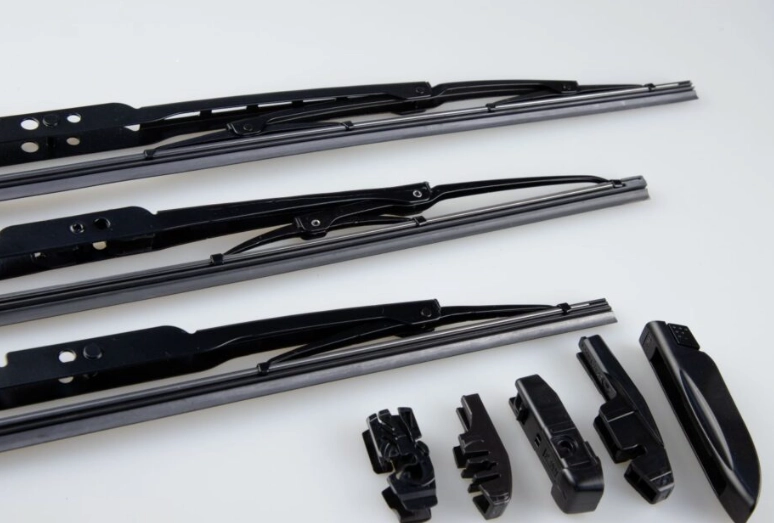
Step-by-Step: How to Install Your New, Correctly-Sized Blades
You've got the right size and the right connector. Let's put them on.
- Prep: Get the wiper arms in the service position (as described in the measuring section). Place a towel over the windshield under the arm just in case the metal arm slips and hits the glass. It happens.
- Remove the Old Blade: Find the release mechanism. On a J-hook, there's usually a small plastic tab on the underside of the blade connector. Press it and slide the blade down the hook (towards the base of the windshield) to disengage. Don't just yank. If it's stuck, a shot of silicone spray on the hook can help.
- Compare and Attach Adapter: Before you touch the new blade, select the correct adapter from the kit by comparing it to your old blade's connection. Snap or screw it firmly onto the new blade.
- Install the New Blade: Align the new blade's connector with the wiper arm's hook. For a J-hook, you'll slide it up the hook until you hear/feel a solid click. Give it a gentle tug to ensure it's locked. Do not force it. If it doesn't slide easily, the adapter is likely wrong.
- Lower the Arm Gently: Carefully lower the wiper arm back onto the windshield. Don't let it snap back—you could crack the windshield or damage the new blade.
- Repeat on the other side.
- Test: Turn the ignition on and run the wipers on a dry windshield for a second with the washer fluid to wet the glass first. Check for smooth operation, full coverage, and no hitting or chattering.
Questions You're Probably Asking (The FAQ)
Wrapping It Up: Your Action Plan
Figuring out your wiper blades size isn't rocket science, but it does require a tiny bit of diligence. Here's your foolproof plan:
- Consult your owner's manual first. It's the source of truth.
- Verify by measuring your old blades. Use a flexible tape and measure the rubber, not the whole assembly.
- Use an online tool as a final check. If all three sources agree, you're 100% confident.
- Pay attention to the connector. Match it to your old blade or your car's wiper arm hook.
- Install carefully, test immediately, and enjoy a clear, safe view.
The peace of mind you get from knowing you have the right tool for the job is worth the extra five minutes of checking. No more guessing, no more returns, just a clean windshield when you need it most.
Go on, give those old, streaky blades the boot. You've got this.