Quick Navigation
Let's be honest, for most of us, the car emissions test is just another line item on the to-do list, a minor nuisance that costs money and time. You drive in, they stick a probe up your tailpipe or plug into your car's computer, and you hope for a pass. But have you ever stopped to wonder, what do car emissions test for, really? What are those machines sniffing out, and why does it even matter?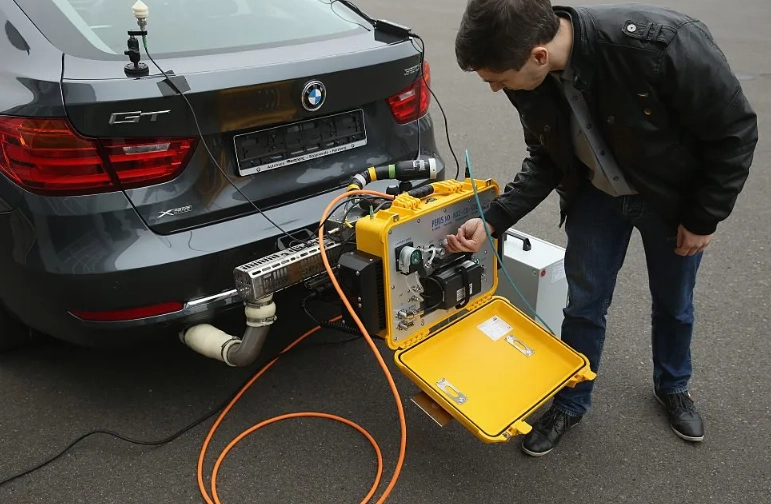
I remember the first time I failed one. My old sedan chugged into the test center, and the technician gave me that look. You know the one. The "this isn't going to end well" look. The report came back with a bunch of numbers and codes I didn't understand. It felt like a secret language meant to confuse me into paying for repairs I might not need. That frustration sent me down a rabbit hole, and what I learned completely changed how I see my car and that little test.
It's not just bureaucratic red tape. It's a check-up for your car's lungs and a report card on what it's breathing out into the world. So, let's pull back the curtain.
The Main Culprits: What's Actually in Your Exhaust?
When your engine burns fuel, it's not a perfect process. It creates a cocktail of gases, and some of them are pretty nasty. The emissions test is primarily looking for four key pollutants. Think of them as the usual suspects.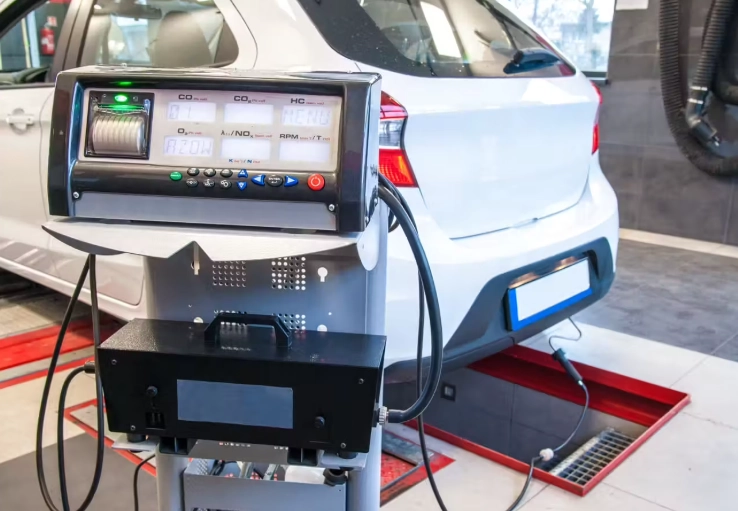
Hydrocarbons (HC)
These are basically unburned or partially burned fuel. Raw gasoline vapors, if you will. When you smell gasoline near a car, you're smelling hydrocarbons. They're a major contributor to urban smog (that hazy, brown layer you see over cities). Breathing in HC can irritate your eyes, lungs, and cause other respiratory problems. The test checks to make sure your engine is burning fuel efficiently and that fuel isn't leaking into the exhaust from a rich mixture or misfires.
Carbon Monoxide (CO)
This is the silent, deadly one. It's a colorless, odorless gas produced when combustion doesn't have enough oxygen. Faulty fuel injection, a clogged air filter, or a bad oxygen sensor can cause high CO. In high concentrations, it's fatal to humans. Even at lower levels, it reduces the blood's ability to carry oxygen. The test ensures your engine's air-fuel mixture is balanced correctly.
So, when you ask "what do car emissions test for?", carbon monoxide is always at the top of the list for safety reasons alone.
Nitrogen Oxides (NOx)
This is a group of gases that form when nitrogen and oxygen in the air react under the high heat and pressure inside your engine's cylinders. They are a primary ingredient in acid rain and, again, that photochemical smog. They also contribute to fine particulate pollution. Controlling NOx is tough because it's a byproduct of the high-temperature, efficient combustion we want. Modern cars use Exhaust Gas Recirculation (EGR) valves and special catalytic converters to tackle NOx.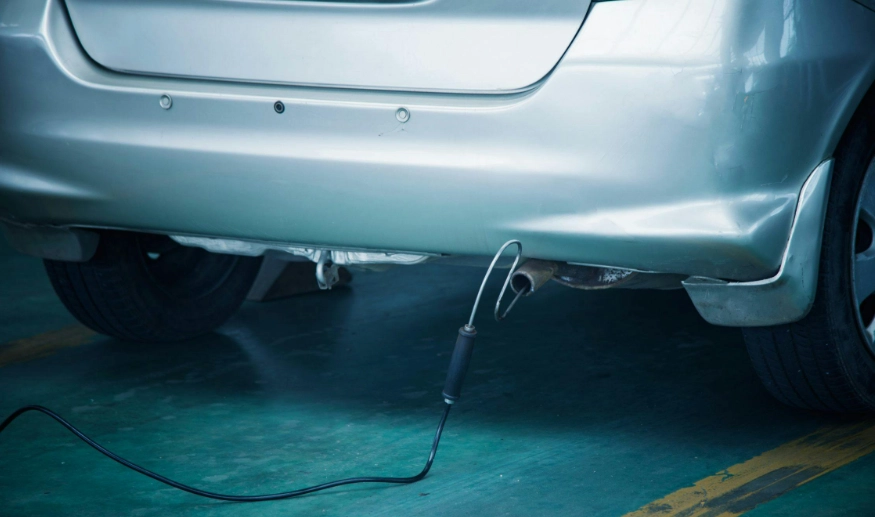
Particulate Matter (PM)
Especially for diesel engines, but also modern gasoline direct-injection engines, this refers to tiny soot particles. These are the black smoke you might see from an old truck. These microscopic particles can penetrate deep into the lungs and even enter the bloodstream, linked to heart and lung disease. Tests for diesels often include an opacity test, which measures how much light this soot blocks.
How Do They Test for This Stuff? The Two Main Methods
This depends on the age of your car and your state's requirements. The technology has evolved significantly.
OBD-II Test (On-Board Diagnostics)
For most cars built from 1996 onward, this is the standard. It's the simpler, faster method. The technician doesn't even sniff your tailpipe. Instead, they plug a scanner into your car's OBD-II port (usually under the dashboard near the steering wheel).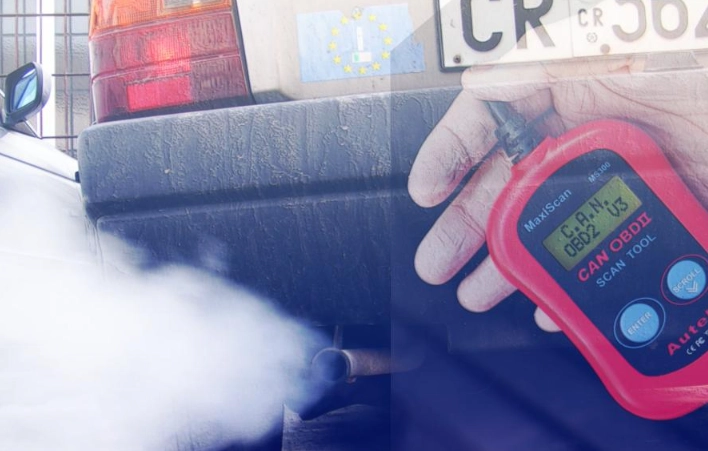
The scanner talks to your car's computer. It's not directly measuring gases. Instead, it's checking if all the emissions control systems are working as designed and if the computer has detected any problems. It looks for "readiness monitors" (are all self-checks complete?) and for any stored Diagnostic Trouble Codes (DTCs).
If your "Check Engine" light is on, you will almost certainly fail an OBD-II test. The light is literally telling you the computer has found a problem that could affect emissions.
Tailpipe Test
For older cars (pre-1996) or in some specific testing scenarios, they use a tailpipe test. A probe is inserted into your exhaust pipe while your car runs, sometimes on a dynamometer (rolling road) that simulates driving conditions. The probe sucks in exhaust samples and an analyzer measures the exact concentrations of HC, CO, CO2, and NOx.
This method gives a direct, real-time snapshot of what's coming out. It can catch problems that might not yet trigger the OBD system, but it's more involved and takes longer.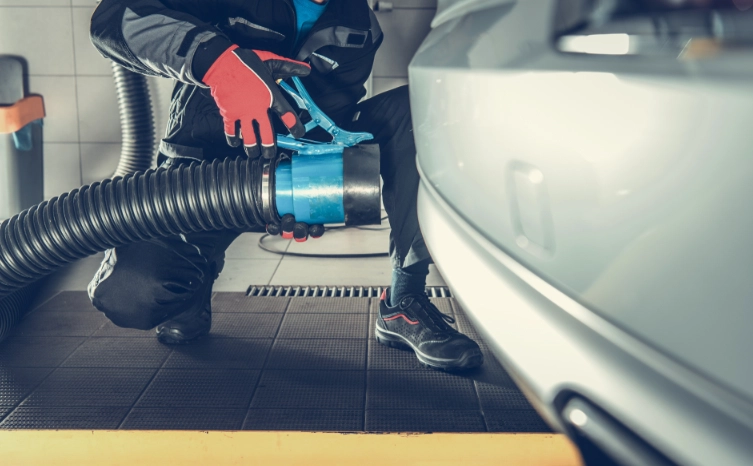
Here’s a quick comparison of the two methods, which should clear up a lot of confusion about the process:
| Test Method | How It Works | Cars It Applies To | What It Checks | Speed |
|---|---|---|---|---|
| OBD-II Test | Scanner plugged into the car's computer port. | Most cars from 1996 model year onward. | System readiness, fault codes, sensor status. | Very Fast (a few minutes). |
| Tailpipe Test | Probe measures gases directly from the exhaust. | Older cars (pre-OBD-II), some diesel tests. | Direct concentration of HC, CO, NOx in exhaust. | Slower (requires warm-up, specific RPM). |
Beyond the Big Four: Other Critical Checks
While the gases are the headline act, a proper emissions inspection often looks at other components that prevent pollution.
Evaporative Emissions System (EVAP): This system catches gasoline vapors from your fuel tank, preventing them from just venting into the air. The test might check for leaks in this sealed system. A loose or faulty gas cap is the most common cause of an EVAP-related failure—a cheap fix people often miss.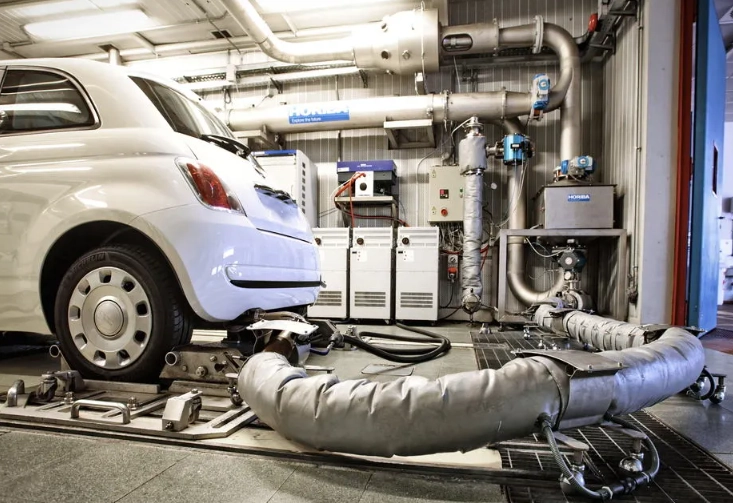
Gas Cap Test: Speaking of which, many places do a simple pressure test on your gas cap. If it doesn't seal, fuel vapors escape, contributing to HC pollution. It seems trivial, but millions of leaky caps add up.
Visual Inspection: The technician might do a quick visual check to see if major emissions control components are present and look intact. Is the catalytic converter there? Are the exhaust pipes connected? They're looking for obvious tampering or removal.
Why Did I Fail? Common Reasons & What to Do Next
Failing is frustrating, but the report is a clue, not a condemnation. Here are the most common reasons and what they point to.
- Check Engine Light is On: This is the number one reason. You need to get the code read (any auto parts store will usually do it for free) and address the underlying issue. It could be anything from a loose wire to a failing sensor.
- High HC and CO Readings: This usually points to a "rich" condition—too much fuel, not enough air. Causes include a faulty oxygen sensor, dirty fuel injectors, a clogged air filter, or ignition problems (bad spark plugs, wires, coils) causing misfires.
- High NOx Readings: Often indicates an engine running too hot. Check the EGR valve (if your car has one), the engine cooling system, and the catalytic converter's efficiency.
- Not Ready Monitors: If you recently cleared your check engine light or disconnected the battery, your car's computer needs to complete its self-checks. This requires a specific "drive cycle"—a mix of city and highway driving—which can take a few days of normal use.
My own failure was due to a lazy oxygen sensor. It wasn't dead, just slow to respond. The car ran fine, fuel economy was okay, but the computer knew something was off. Replacing it fixed the issue and actually improved my MPG a bit.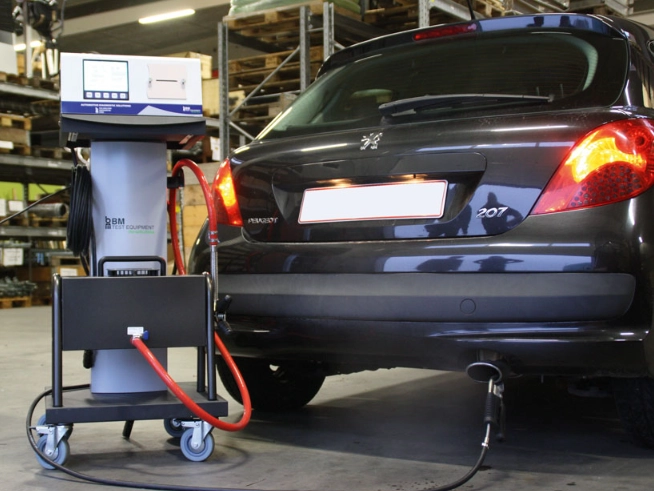
Your Action Plan: How to Pass an Emissions Test
Don't just hope for the best. A little preparation goes a long way.
- Fix Any Warning Lights: Do not go in with the Check Engine light on. Just don't.
- Get an Oil Change: Fresh oil helps the engine run cleaner. Old, dirty oil can release vapors into the emissions system (via the PCV valve).
- Fill Up with Quality Fuel & Add a Cleaner: Run a tank of higher-tier gasoline and consider a fuel system cleaner like Techron before the test. It can clean injectors and help the catalytic converter.
- Ensure the Car is Fully Warm: Drive the car for at least 20 minutes on the highway before the test. A hot engine and a hot catalytic converter operate at peak efficiency. A cold start test is a recipe for higher readings.
- Check the Basics: Air filter, spark plugs, and make sure that gas cap is tight. These are cheap, easy fixes.
- Inflate Tires Properly: If your test involves a dynamometer, proper tire pressure ensures smooth rolling.
If you're unsure, many independent repair shops offer a pre-test inspection. It might cost a small fee, but it's cheaper than an official failure and retest.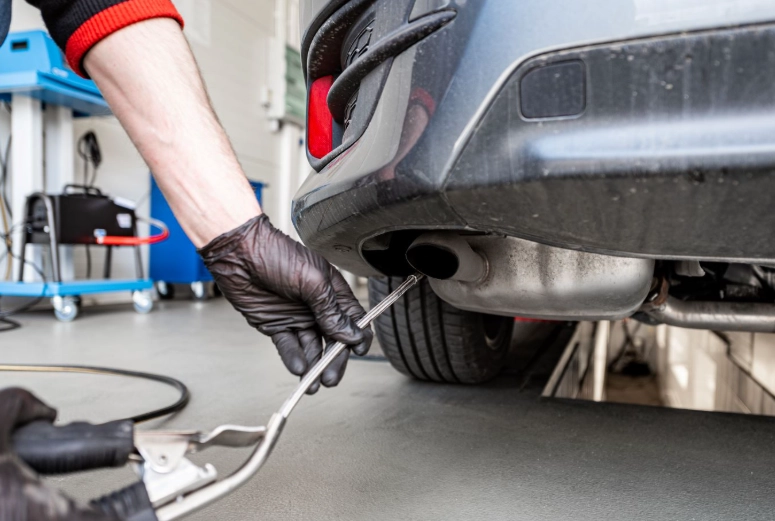
The Bigger Picture: Why These Tests Exist
I used to think this was just a tax or a hassle. But look at the data. According to the U.S. Environmental Protection Agency (EPA), modern vehicles are over 99% cleaner for common pollutants than cars from the 1970s. That's not a small improvement. Smog levels in major cities have dropped dramatically, even with more cars on the road.
The Clean Air Act is the federal law that drives this. States with severe air quality problems are required to have emissions testing programs. It's not arbitrary. It's a public health measure with decades of science behind it.
And it's not static. Standards evolve. The move toward testing OBD systems instead of just tailpipe emissions is a huge leap forward in accuracy and targeting the real problem cars.
Common Questions & Straight Answers
So, the next time your registration renewal notice comes with that emissions test reminder, you'll know it's more than just a formality. It's a check on your car's health and its impact on everyone around you. Understanding what do car emissions test for takes the mystery out of it and turns it from a dreaded chore into a useful piece of maintenance feedback.
It's a bit like going to the dentist. You might not love it, but catching small problems early saves you from bigger, more expensive ones down the road—and keeps everything running smoothly for everyone.