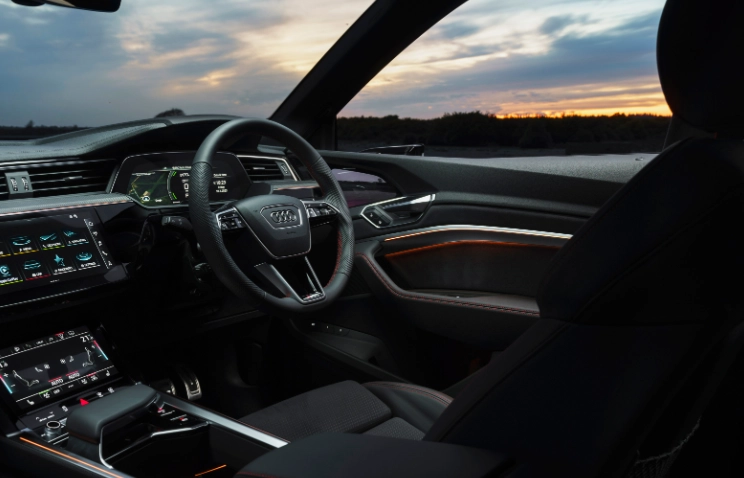
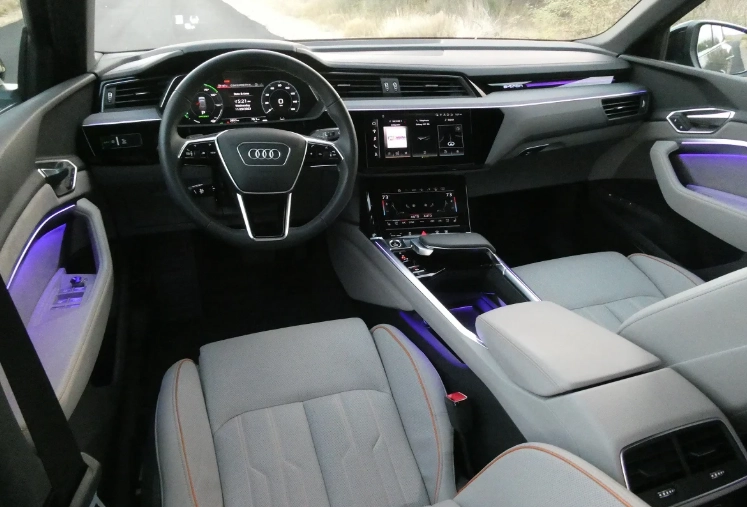
You slide into the driver's seat of the Audi E-Tron. The door closes with a reassuring thunk. Before you even press the start button, you're surrounded. Not by noise, but by screens. A digital instrument cluster, two touchscreens stacked in the center, and even the rearview mirror is a screen if you option it. Is this the pinnacle of luxury electric vehicle interior design, or has Audi created a beautiful but slightly overwhelming digital cocoon? After spending considerable time with it, I think it's a bit of both—a masterclass in some areas, with a few quirks you need to know about before buying.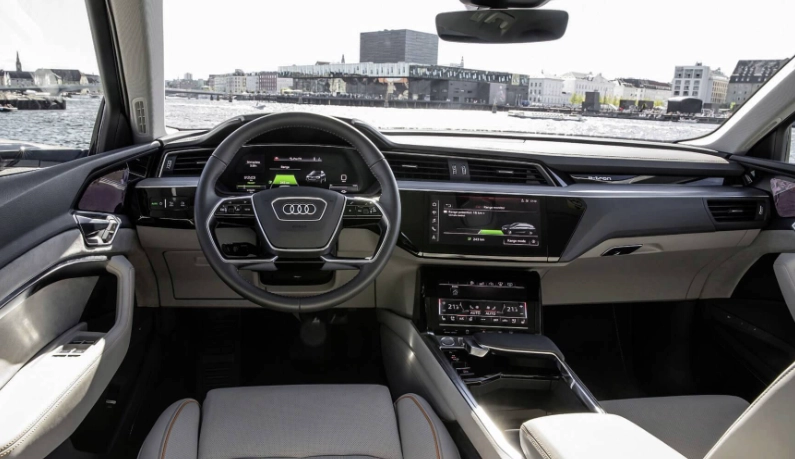
What's Inside This Review?
- First Impressions & Design Philosophy
- Materials & Build Quality: The Good and The Not-So-Obvious
- The Digital Cockpit & Tech: Power and Frustration
- Comfort, Space & Daily Usability
- Storage & Practicality: Where It Shines and Stumbles
- How It Stacks Up: E-Tron vs. Key Rivals
- The Common Complaints (Are They Justified?)
- Expert Tips & Hidden Details
- Your E-Tron Interior Questions Answered
First Impressions & Design Philosophy
Audi calls it the "digital stage." I call it controlled drama. Unlike Tesla's minimalist, almost spartan approach, the E-Tron's interior feels like a logical evolution of a traditional luxury cabin. The dashboard is wide, layered, and wraps around you. The ambient lighting isn't just a strip; it's a system that can highlight the contour of the entire dash and door panels. It feels expansive and secure at the same time.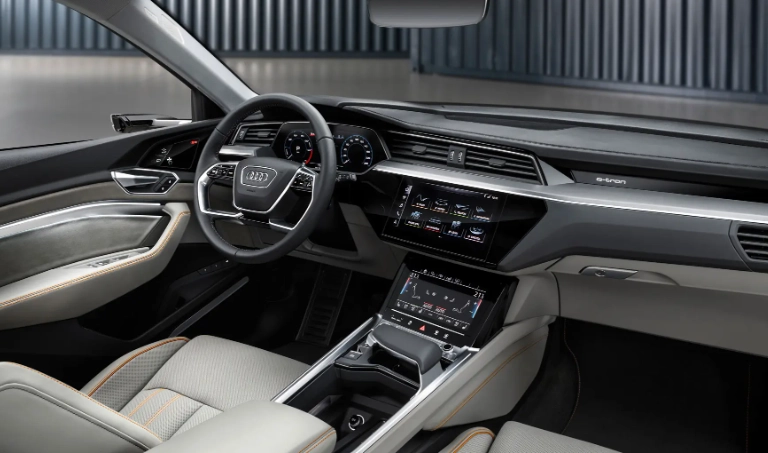
The centerpiece is obviously the dual touchscreen MMI system. But look closer. The upper screen is angled slightly toward the driver. The lower screen, for climate controls, is flush-mounted. The physical volume knob and the few remaining buttons (hazard lights, drive select) have a precise, damped click. This isn't a tech demo thrown into a car; it feels integrated, at least at first glance.
Materials & Build Quality: The Good and The Not-So-Obvious
This is where Audi traditionally excels, and the E-Tron is largely no exception. Run your hand across the top of the dashboard—it's a soft, grained synthetic material that feels expensive. The doors are a mix of leather, Alcantara, and real aluminum or wood inlays depending on your trim.
But here's a nuance most reviews miss: material consistency varies by trim level more than you'd think. The base interior uses more leatherette and less padding in the door armrests. Opt for the top-tier design selection, and you get Valcona leather with diamond stitching and superbly padded surfaces everywhere. The difference in daily tactile satisfaction is significant.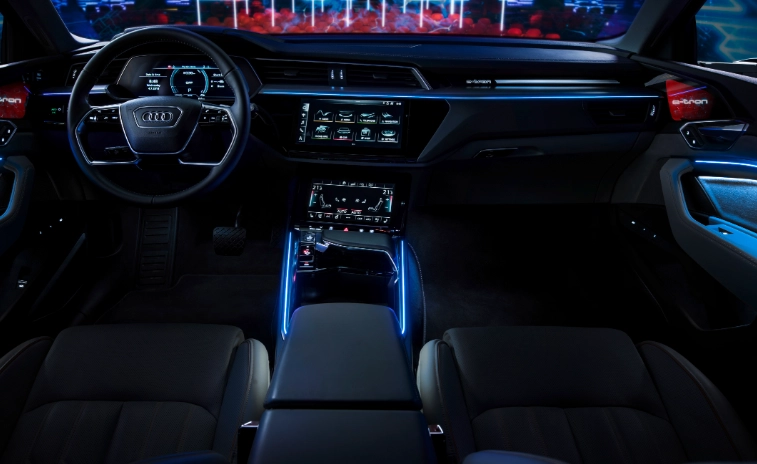
Pro Tip: If you're buying used or configuring, prioritize the seats and steering wheel material. A heated, ventilated, massaging seat in high-quality leather improves the experience more than any extra screen.
Audi also pushes its sustainable materials. You can get seat upholstery made from recycled PET bottles. It sounds crunchy, but it looks and feels remarkably like high-quality microsuede. It's durable and easy to clean—a practical choice for families, not just a greenwashing statement.
Material Breakdown by Key Area
| Interior Area | Standard Trim Materials | Premium/Design Selection Upgrades | Durability & Feel Notes |
|---|---|---|---|
| Dashboard Top | Soft-touch synthetic leather | Optional leather wrapping | Resists sun glare well, easy to clean. |
| Door Armrests & Upper Door | Leatherette with fabric insert | Full leather or Alcantara, better padding | Base trim armrests can feel a bit hard on long trips. |
| Center Console & Controls | Piano black plastic, aluminum trim | Open-pore wood, matte brushed aluminum | Avoid piano black if you hate fingerprints. It's a magnet for them. |
| Seats (Standard) | Leatherette (Perforated for ventilation) | Valcona leather, recycled microfiber | Ventilated seats are a game-changer in hot climates. |
| Carpet | Standard nylon carpet | Optional thicker velour carpet mats | Invest in all-weather floor liners (like from WeatherTech) for practicality. |
The Digital Cockpit & Tech: Power and Frustration
The dual-screen setup (Audi's MMI touch response system) is powerful. The graphics are razor-sharp, the haptic feedback when you press a "button" provides a subtle click and vibration. It feels futuristic. You can customize the home screen, use natural voice commands, and the navigation overlays beautifully on the digital instrument cluster (the Virtual Cockpit).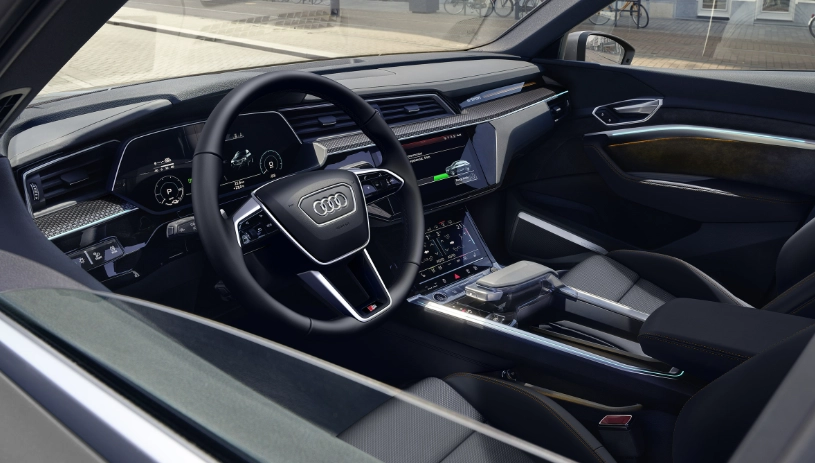
Now, the reality check. It demands your eyes. Adjusting the climate control, which you do by feel in most cars, requires looking down and tapping or sliding on a flat screen. There's no physical knob for temperature. On a bumpy road, this gets annoying. A common mistake new owners make is not using the voice control enough. Saying "Hey Audi, set temperature to 72 degrees" is safer and easier.
The optional virtual side mirrors (cameras instead of traditional mirrors) are a fascinating but polarizing part of the interior experience. The small screens on the door pillars show a wide-angle view. They reduce blind spots dramatically and cut wind noise. But. Your brain needs time to adjust to the lack of depth perception and different focal length. Parking can be tricky at first. They're also expensive to replace if damaged.
Comfort, Space & Daily Usability
Front seat comfort is excellent. The seats offer plenty of adjustment, including adjustable thigh support. The cabin is incredibly quiet, thanks to the lack of an engine, double-pane acoustic glass, and ample sound deadening. It's one of the quietest interiors on the road, electric or not.
Rear seat space in the standard SUV body style is generous for two adults, okay for three. The floor is nearly flat (a benefit of the EV platform), so the middle passenger isn't too cramped. Headroom is plentiful. The Sportback (coupé-style) version sacrifices a bit of rear headroom for style.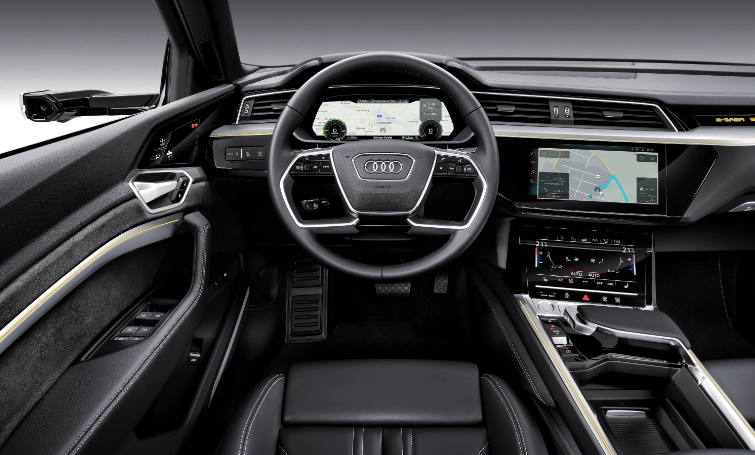
The panoramic glass roof is standard on most trims and makes the cabin feel airy. It has an electric shade, which is crucial—some competitors (Tesla) lack this, turning the car into a greenhouse in summer.
Storage & Practicality: Where It Shines and Stumbles
This is a make-or-break area for families. Let's break it down:
The Good: The front trunk (frunk) offers a decent 2.8 cubic feet of space. It's perfect for charging cables, a small bag, or groceries you don't want in the cabin. The center console has a deep bin under the armrest, and there's a wireless charging pad that actually fits modern large phones.
The Miss: The glovebox is tiny. Seriously, it's almost symbolic. The door pockets are shallow. The biggest issue? The lack of physical buttons means there's no natural place to just drop your phone, keys, or sunglasses without them sliding around. You'll need an aftermarket organizer for the console bin.
Cargo space in the rear is a healthy 28.5 cubic feet behind the rear seats, expanding to 57 cubic feet when folded (according to Audi USA specs). The load floor is low, and the seats fold nearly flat. It's practical for Costco runs or luggage for a road trip.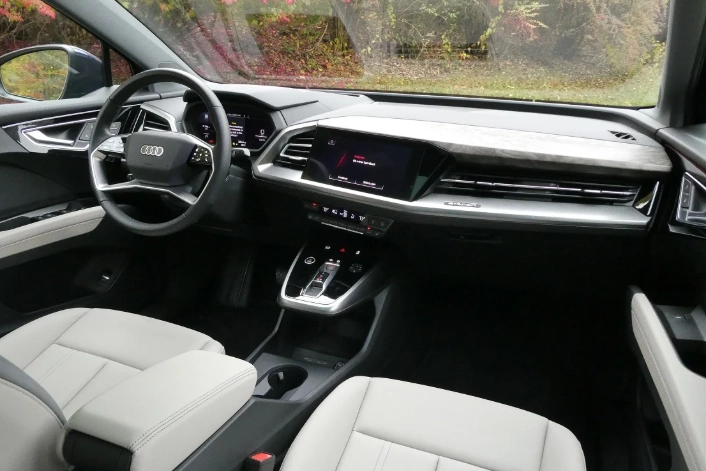
How It Stacks Up: E-Tron vs. Key Rivals
You're likely also looking at a Tesla Model X and a BMW iX. Here’s the interior perspective.
Tesla Model X: The E-Tron feels more traditionally solid and luxurious. The Model X's yoke steering wheel and reliance on a single central screen is more radical. The E-Tron has better physical material quality; the Model X feels more minimalist and tech-forward but can seem sparse. The E-Tron's build quality (panel gaps, rattles) is generally perceived as superior.
BMW iX: This is the tougher fight. The iX's interior is more avant-garde, with its hexagonal steering wheel, crystal controls, and fabric-covered dashboard. It feels more like a "lounge." The E-Tron feels more like a "driver's cockpit." The iX might have a slight edge in material innovation and rear-seat space, but the E-Tron's interface, while not perfect, is more familiar to anyone used to luxury cars.
The Common Complaints (Are They Justified?)
Fingerprint Magnet: Yes, absolutely justified. The glossy black around the screens and the lower touchscreen collect fingerprints and dust like a museum exhibit. Keep a microfiber cloth in the door pocket.
Touchscreen Lag/Glitches: Earlier models had some lag. Software updates have largely smoothed this out. It's not as instantly responsive as an iPad, but it's fine. The system does occasionally need a reboot (hold down the center two buttons), a quirk of all complex car software.
Lack of Physical Climate Controls: Justified for the first week. You do get used to it, and the voice control or steering wheel shortcuts help. But on a cold morning when you just want to crank the heat without looking, you'll miss a physical knob.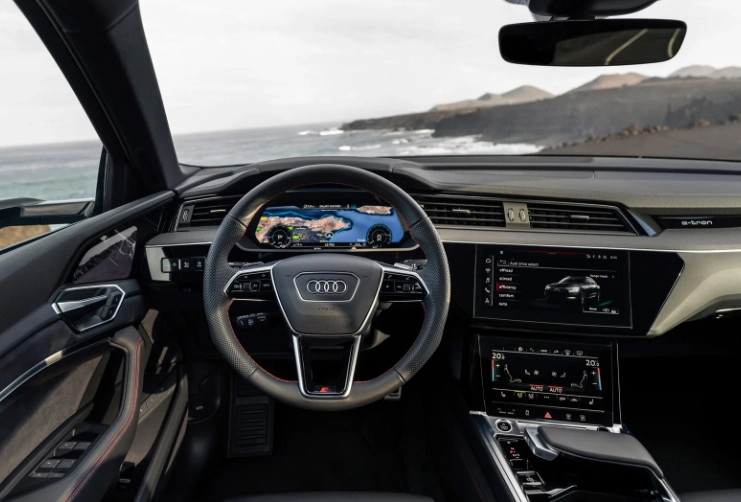
Expert Tips & Hidden Details
Most people never discover these:
1. Long-press the fan speed icons on the lower climate screen. It turns the entire lower screen into a full-screen climate control panel for easier adjustment on the move.
2. You can customize the "star" button on the steering wheel. Don't leave it on drive mode select. Set it to toggle the regenerative braking level or quickly activate the efficiency assistant.
3. The haptic "buttons" on the steering wheel are capacitive. You don't press them; you slide your finger over them to adjust volume or scroll menus. It's weirdly satisfying once you get it.
4. In the virtual cockpit display, cycle through the views until you get the "E-Tron" specific view. It shows power flow and regen in a beautifully animated way.
5. The ambient lighting can be set to change color based on drive mode. Dynamic mode = red, Efficiency = blue. It's a small touch that adds to the theater.
Your E-Tron Interior Questions Answered