You check your engine oil. You might even remember the coolant. But brake fluid? For most drivers, it's the forgotten hero—until the pedal goes soft. I've seen too many cars in the shop with neglected brake fluid, a problem that's cheap to prevent but terrifyingly expensive to fix if it fails. Let's talk about what this fluid actually does, why the type matters more than you think, and how to keep it in shape so your car stops when you need it to.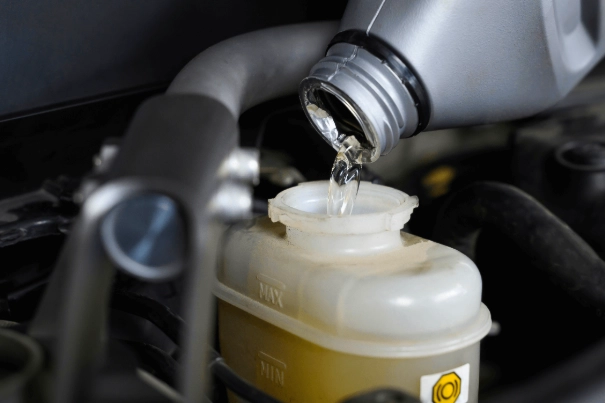
Your Quick Navigation Guide
- What Does Brake Fluid Actually Do? (It's Not Just a Liquid)
- Brake Fluid Types Explained: DOT 3, 4, 5, 5.1 – Which One is in Your Car?
- When Should You Change Brake Fluid? The Truth Beyond the Manual
- How to Check and Top Up Brake Fluid Yourself
- Safety First: Handling and Disposal You Can't Ignore
- 3 Common Brake Fluid Mistakes Even Experienced DIYers Make
- Your Brake Fluid Questions, Answered
What Does Brake Fluid Actually Do? (It's Not Just a Liquid)
Think of your brake system as a closed network of pipes. You press the pedal, and that force needs to travel instantly to the brake calipers at each wheel to squeeze the pads. Brake fluid is the incompressible hydraulic medium that transmits that force. If air gets in the lines (and air is compressible), your pedal feels spongy and stopping power drops dramatically.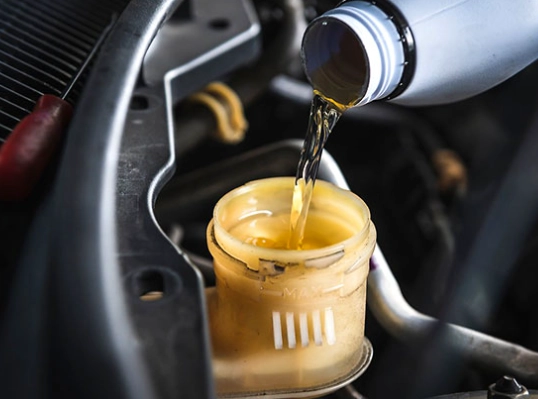
But here's the kicker—brake fluid also has to withstand insane heat. When you brake, the kinetic energy of a moving car turns into heat at the rotors and pads. That heat soaks into the calipers and, eventually, the fluid inside. Standard brake fluid has a boiling point over 400°F (204°C). If the fluid boils, it creates vapor bubbles (again, compressible), and you experience complete brake fade. The pedal sinks to the floor. It's as scary as it sounds.
The Hidden Enemy: Brake fluid is hygroscopic. That's a fancy word meaning it absorbs moisture from the air through tiny pores in rubber hoses and even the reservoir cap. This is its fatal flaw. Just 3% water contamination can lower the boiling point by 25%. In humid climates, this happens faster than you'd believe.
Brake Fluid Types Explained: DOT 3, 4, 5, 5.1 – Which One is in Your Car?
Not all brake fluids are the same. The U.S. Department of Transportation (DOT) sets the standards, hence the DOT ratings. The key difference is their dry and wet boiling points. "Dry" is fresh fluid. "Wet" is fluid with 3.7% water absorbed, simulating a worn-out state.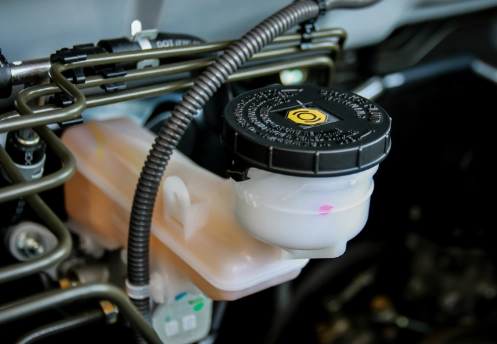
| Type | Base Chemistry | Minimum Dry Boiling Point | Minimum Wet Boiling Point | Best For... | Critical Note |
|---|---|---|---|---|---|
| DOT 3 | Glycol Ether | 401°F (205°C) | 284°F (140°C) | Older daily drivers, light-duty use. | Most common, absorbs moisture quickly. |
| DOT 4 | Glycol Ether/Borate Ester | 446°F (230°C) | 311°F (155°C) | Modern cars, European vehicles, light towing. | Higher temp tolerance, still hygroscopic. |
| DOT 5 | Silicone | 500°F (260°C) | 356°F (180°C) | Classic cars in storage, military vehicles. | DO NOT MIX with others. Can trap air bubbles. |
| DOT 5.1 | Glycol Ether/Borate Ester | 500°F (260°C) | 356°F (180°C) | Performance driving, heavy towing, ABS systems. | High-performance glycol fluid. Compatible with DOT 3/4. |
Look at the wet boiling point column. See how much it drops? That's why old fluid is dangerous. Most modern cars use DOT 4. Your owner's manual is the final authority—use what it specifies. A mechanic once told me he uses DOT 4 in everything unless it's a classic car, calling it a "good middle-ground upgrade" for older vehicles spec'd for DOT 3, but always check your manual first.
When Should You Change Brake Fluid? The Truth Beyond the Manual
The standard advice is every 2 years or 30,000 miles, whichever comes first. That's a safe starting point. But it's a guideline, not a law.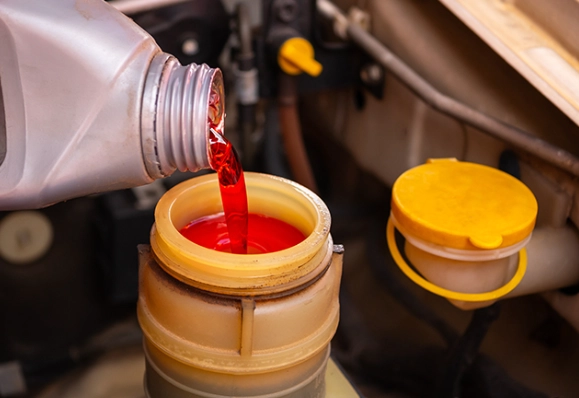
Your driving changes the timeline. Do you commute in heavy traffic, brake constantly? That heats the fluid more. Do you live in Florida or Singapore? Humidity is your fluid's worst enemy. I recall a customer's car from the coast—the fluid tested saturated after just 16 months.
The professional move is to get it tested. Many shops use a simple electronic tester that measures moisture content. It's a quick, cheap check during an oil change. If it flashes red, change it. Don't wait for symptoms.
What are the symptoms?
- A brake pedal that feels softer or travels farther than it used to.
- Brakes that feel less responsive, needing a harder push.
- In severe cases, a visible drop in the fluid level in the reservoir (check for leaks first!).
How to Check and Top Up Brake Fluid Yourself
This is an easy 2-minute check anyone can do. You'll find a small, usually translucent plastic reservoir on top of the brake master cylinder at the back of the engine bay, near the driver's side.
- Park on level ground and let the engine cool.
- Wipe the reservoir cap clean with a rag so no dirt falls in.
- Look at the side. You'll see "MIN" and "MAX" lines. The fluid level should be between them, closer to MAX.
- If it's low, buy the correct DOT type (check your manual or the cap itself).
- Slowly add fluid to bring it to the MAX line. Do not overfill.
Important: A slowly dropping fluid level is normal over years as brake pads wear. The caliper pistons extend, taking more fluid from the reservoir. A sudden drop is a red flag for a leak—get it inspected immediately. Also, if your fluid is dark brown or black, it's way past its prime, even if the level is okay.
Safety First: Handling and Disposal You Can't Ignore
Brake fluid is nasty stuff. Glycol-based fluid (DOT 3, 4, 5.1) is toxic and an aggressive paint stripper. I learned this the hard way years ago with a drop on my car's fender. It etched right through the clear coat.
- Wear gloves and safety glasses.
- Cover painted surfaces with a rag when working near the reservoir.
- Wipe up spills immediately with water and a rag.
- Never reuse fluid from an old, opened bottle. It's already absorbing moisture from the air.
- Disposal is critical. It's hazardous waste. Don't pour it down the drain or on the ground. Take used fluid to an auto parts store (many accept it) or a hazardous waste collection facility.
3 Common Brake Fluid Mistakes Even Experienced DIYers Make
1. Using the Reservoir Cap from a Different Car
It seems trivial, but that cap is vented specifically for your system. A wrong cap can mess with the venting, causing pressure issues or letting in more moisture.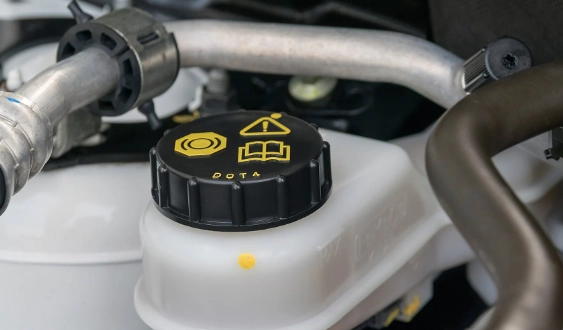
2. Assuming "DOT 4" is All the Same
There's a range. Standard DOT 4 meets the minimum spec. There are also high-performance DOT 4 variants (sometimes called DOT 4+, DOT 4 Super, or meeting ISO 4925 Class 6) with much higher boiling points. If you track your car or tow, the upgrade is worth it. Check standards on the bottle.
3. Not Bleeding the ABS Module After a Full Flush
This is the big one. When you do a complete brake fluid change, you need to bleed the system. On modern cars with ABS, air can get trapped in the modulator. Getting it out often requires activating the ABS valves with a diagnostic scan tool. If you don't, you might have a spongy pedal forever until a pro fixes it.
Your Brake Fluid Questions, Answered
How often should I really change my brake fluid?
Most manufacturers recommend a change every 2 years or 30,000 miles, but that's a general rule. The real answer depends on your driving. If you do a lot of stop-and-go city driving, tow heavy loads, or live in a humid climate, the fluid absorbs moisture faster. I've seen fluid in humid coastal areas go bad in under 18 months. The best practice is to have its moisture content tested annually with a brake fluid tester after the first two years.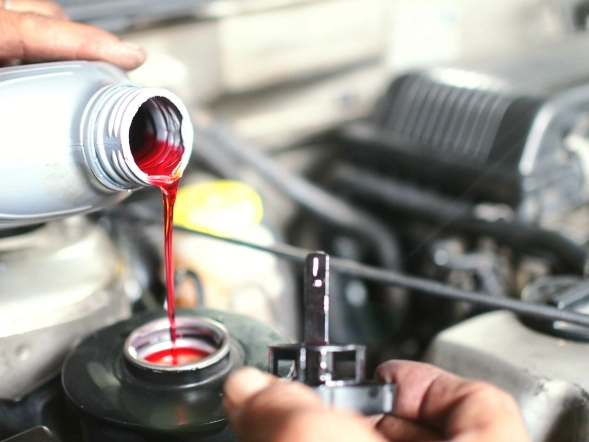
Can I mix DOT 3, DOT 4, and DOT 5.1 brake fluid?
You can mix DOT 3, DOT 4, and DOT 5.1 because they are all glycol-based and are compatible. However, mixing lowers the boiling point to the lowest fluid in the system. If you top up high-performance DOT 4 with basic DOT 3, you've just degraded the entire system's performance. Never, under any circumstances, mix glycol-based fluids (DOT 3, 4, 5.1) with silicone-based DOT 5. They are chemically incompatible and will cause a spongy pedal and system failure.
Is changing brake fluid a DIY job for a beginner?
Bleeding brakes to change the fluid is one of the more advanced DIY tasks. The procedure itself is straightforward, but the risk is high. The biggest mistake is introducing air into the ABS module, which requires a specialized scan tool to bleed properly—a costly fix at a shop. If you're not confident in following the exact sequence for your car, keeping air out, and disposing of the toxic old fluid properly, this is one job worth paying a professional to do right. A brake system isn't where you want to learn from mistakes.
My brake fluid is dark. Does that always mean it needs changing?
Not necessarily. While dark, murky fluid is a strong visual indicator of contamination and age, color alone isn't a perfect gauge. Some fluids darken slightly with normal heat cycling. Conversely, fluid can look relatively clear but be saturated with moisture, which is invisible. The only reliable way to know is to test its boiling point or moisture content. A dark color is a good prompt to get it tested, but don't rely on it as your sole diagnostic tool.
Brake fluid isn't glamorous. You won't feel a difference after changing it like you would with fresh oil. But its job is binary: it works, or it fails catastrophically. A fifty-dollar fluid change is some of the cheapest insurance you can buy for the most important system in your car. Check it. Test it. Change it. Your safety literally depends on it.