In This Guide
- Which Florida Counties Actually Require an Emissions Test?
- The Nitty-Gritty: How Does the Florida Emissions Test Work?
- A Deeper Dive: History and Why the Rules Exist
- Frequently Asked Questions (The Stuff You're Really Wondering)
- Practical Tips to Prepare for and Pass the Test
- Key Resources and Official Links
Let's cut right to the chase. You're probably here because your registration is coming up, or you just moved to Florida, and you heard something about smog checks. The question burning in your mind is simple: Is emissions testing required in Florida? The short answer is... it depends. Annoying, right? But that's the reality. It's not a simple yes or no for the whole state, and that's where most people get confused.
I remember helping a friend who moved from California. He was so stressed, budgeting for a test he didn't even need. He spent days researching, getting conflicting info from forums. It was a mess. The official info is out there, but it's buried in government PDFs and legalese. My goal here is to translate all that into plain English, so you know exactly what applies to you.
Bottom Line Up Front: Florida does NOT have a statewide emissions inspection program. However, a handful of counties are required by the federal government to have testing programs due to their air quality. For the vast majority of Florida drivers, the answer to "Is emissions testing required in Florida?" is a clear no.
Which Florida Counties Actually Require an Emissions Test?
This is the core of it. The requirement is purely geographical. The U.S. Environmental Protection Agency (EPA) designates areas that don't meet national air quality standards for ozone. Counties in those "non-attainment" areas have to implement vehicle inspection and maintenance (I/M) programs. So, your need for a test is determined by your county of registration.
As of now, these are the counties where emissions testing is mandatory for certain vehicles:
- Broward County
- Duval County (Jacksonville)
- Hillsborough County (Tampa)
- Miami-Dade County
- Orange County (Orlando)
- Palm Beach County
- Pinellas County (St. Petersburg/Clearwater)
If your vehicle is registered in any other county—like Lee (Fort Myers), Sarasota, Leon (Tallahassee), or Escambia (Pensacola)—you can stop worrying right now. No test needed. Go enjoy the beach.
But wait, there's more. Even within those seven counties, not every vehicle is subject to testing. The rules have specific carve-outs.
What Vehicles Are Exempt from Testing?
Here's where it gets detailed. The state understands that testing every single lawnmower and golf cart is ridiculous. So they've set exemptions. If your vehicle falls into one of these categories, you skip the test, even if you live in Broward or Miami-Dade.
Quick Exemption Checklist: See if your ride qualifies for a free pass.
- New vehicles (for their first 3 registration periods).
- Vehicles 10 model years old or newer (this is a big one, and it changes yearly).
- Electric vehicles and motorcycles.
- Diesel-powered vehicles (with some very specific exceptions for heavy-duty trucks).
- Vehicles with a gross vehicle weight rating (GVWR) over 10,000 lbs (think large trucks, RVs).
- Historical or antique vehicles (those with a "Antique" or "Horseless Carriage" plate).
The "10 model years or newer" rule is the most common exemption. For example, in 2024, any vehicle model year 2015 or newer is exempt. This rule is a rolling window, so each year, the exempt model year gets one year newer. It's the state's way of focusing on older cars that are more likely to have emission problems. Honestly, it's a pretty sensible approach, even if remembering the cutoff year is a pain.
The Nitty-Gritty: How Does the Florida Emissions Test Work?
Okay, so you've determined you live in one of the seven counties and your car isn't exempt. What next? What does the test actually involve?
Florida uses a system called OBD-II testing. Gone are the days of sticking a probe up your tailpipe while the car runs on a dynamometer (though that image is what most people still imagine). The OBD-II test is simpler and faster.
Here’s what happens:
- You drive to an authorized testing station. These are often private garages or dedicated inspection centers. You can find a list on the Florida Department of Environmental Protection (DEP) website or through your county's tax collector/DMV site.
- A certified inspector plugs a scan tool into your car's OBD-II port. That's the little connector usually under the dashboard near the steering column.
- The tool talks to your car's computer. It checks for "readiness monitors"—these are self-tests your car's computer runs on its emission systems. It also looks for any stored diagnostic trouble codes (DTCs), like a check engine light.
- If all monitors are "ready" and there are no emission-related trouble codes, you pass. The whole process often takes less than 15 minutes.
Heads Up: If your check engine light is on, you will almost certainly fail. Don't bother trying to test with it illuminated. The scanner will see the code immediately. Address the underlying issue first.
The cost isn't standardized by the state, so it varies by station. You're typically looking at between $10 and $25. Call around. Some counties have official testing centers with set fees, while private shops can set their own.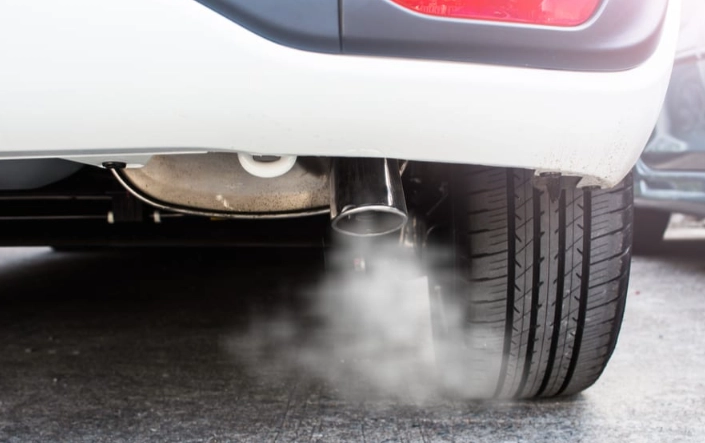
What If My Car Fails the Test?
This is the nightmare scenario, but don't panic. You get a printed report that tells you exactly why you failed (e.g., "Evaporative System Monitor Not Ready," "Catalyst Efficiency Code P0420").
You then have to get the necessary repairs done. The state requires you to spend at least $100 on diagnosis and repair related to the failure before you can get a free re-test. This is to prevent people from just clearing the codes and coming right back (a trick the system is wise to). After spending that $100, you take the car back for a re-test. If it passes, you're good to go. If it fails again, the cycle repeats—you must spend another $100 towards repairs before the next re-test.
There is a waiver option if you spend a certain amount (currently $850) on qualified repairs and still cannot get the vehicle to pass. It's a process, and you need detailed receipts from a qualified repair shop. It's frustrating, I know. I've seen folks with older cars sink money into repairs chasing a pass. Sometimes it makes more financial sense to start thinking about a different vehicle, which is a tough decision.
A Deeper Dive: History and Why the Rules Exist
People often ask, "Why these counties?" It's not random. It's based on ozone pollution data collected over years. South Florida (Miami-Dade, Broward, Palm Beach) and the Tampa Bay area (Hillsborough, Pinellas) have high population density and traffic volume. Central Florida (Orange) has tourism traffic and weather patterns that can trap pollution. Duval County has major industrial activity around Jacksonville.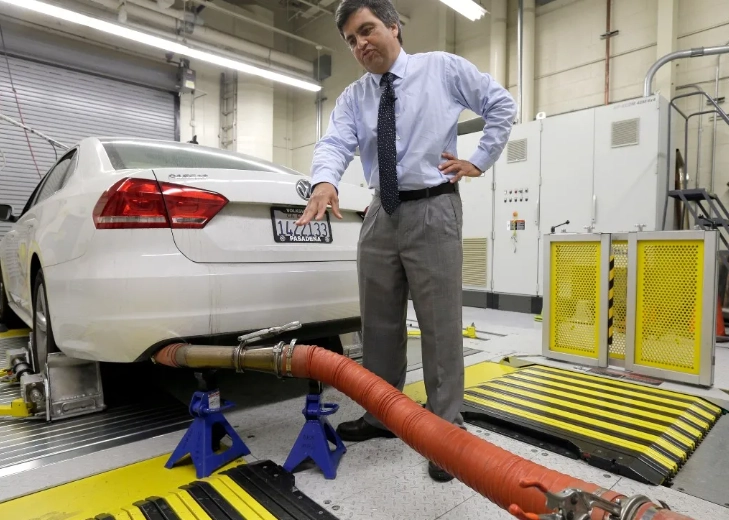
The federal Clean Air Act is the big boss here. If a state doesn't comply with EPA requirements for non-attainment areas, it can lose billions in federal highway funds. So, Florida implements these targeted programs to keep the funding and, theoretically, improve air quality. Whether the current program is the most effective way is a debate for another day, but that's the "why."
It's also worth noting that the program has shrunk. Years ago, more counties were included. As air quality improved, some counties (like Seminole and Volusia) "graduated" out of the program. So the list isn't static; it could change in the future.
Frequently Asked Questions (The Stuff You're Really Wondering)
Let's tackle some specific, real-world questions that go beyond the basic "Is emissions testing required in Florida?"
Do I need a test to renew my registration?
If you are subject to testing, then yes, a passing test is required to complete your annual vehicle registration renewal. The testing station electronically reports your pass to the state. When you go to renew online, by phone, or in person, the system should see the pass. If it doesn't, you'll need your test receipt number. Don't wait until the last day of your birth month to test—give yourself a buffer in case you fail and need repairs.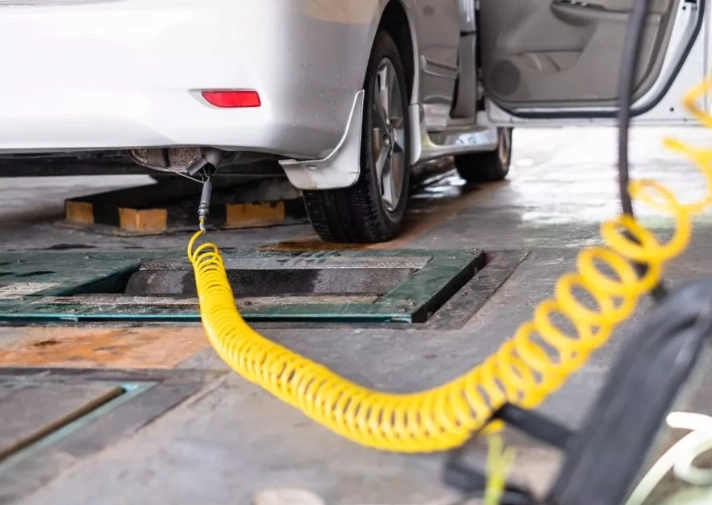
I just moved to Florida from a state with testing. What do I do?
When you first register your out-of-state vehicle in Florida, you generally do not need an emissions test to get your new Florida title and registration, even if you move to one of the seven counties. The testing requirement kicks in at your first renewal after establishing residency. The county tax collector's office will guide you through the initial titling process, which has its own set of headaches (like getting a VIN verification), but an emissions test usually isn't one of them.
What about electric cars and hybrids?
Fully electric vehicles (EVs) are exempt—they have no tailpipe emissions. Hybrids are a bit trickier. They still have a gasoline engine and an OBD-II system, so they are technically subject to testing if they are older than the exempt model years and registered in one of the seven counties. However, in practice, they often pass with flying colors because their engines run less and are typically well-maintained.
Can I get tested in a different county?
You must get tested at an authorized station within your county of registration. You can't drive to a non-testing county to avoid it. The system is tied to your vehicle's registration address.
Is there a safety inspection in Florida?
This is a common point of confusion. Florida eliminated its mandatory annual safety inspection for most vehicles way back in 1981. So, no, there is no general safety check for brakes, lights, tires, etc., when you renew your registration. The only inspection is the emissions test in those specific counties. Some folks think this is great (less hassle), others think it's unsafe (I've seen some real beaters on I-95 with barely visible tail lights). It's a trade-off.
Practical Tips to Prepare for and Pass the Test
If you do need a test, here's how to make sure it goes smoothly.
- Drive Your Car Normally for a Week Before. If you've recently disconnected the battery or cleared trouble codes, your car's computer needs to complete its "drive cycle" to set all the readiness monitors. This involves a mix of city and highway driving under various conditions. Just driving around the block won't cut it.
- Ensure Your Gas Cap is Tight. A loose or faulty gas cap is one of the easiest failures to fix. It can cause an evaporative system leak code. Before you test, make sure it clicks securely at least three times.
- Get an Early Test. Don't wait until your registration expires. Test a month or two early. This gives you ample time to deal with any failures and repairs without the stress of an expired tag.
- Consider a Pre-Scan. Many auto parts stores (like AutoZone or Advance Auto Parts) will scan your car's codes for free. This can give you a heads-up if there's a pending code that hasn't yet triggered the check engine light. It's not a guarantee, but it's useful intel.
- Address a Lit Check Engine Light. I can't stress this enough. It's an automatic fail. The underlying issue could be minor (an oxygen sensor) or major (a catalytic converter), but you have to fix it.
Look, the system isn't perfect. Some argue it catches too few polluters to be worth the hassle for millions of drivers. Others point out that modern cars are so clean that the focus on older models feels punitive to lower-income folks who can't afford a new car. It's a policy with real trade-offs.
Key Resources and Official Links
When in doubt, go straight to the source. Here are the official places to get the most current, accurate information:
- Florida Department of Environmental Protection (DEP) - Air Program: This is the lead agency. Their website has program overviews and FAQs. floridadep.gov/air
- Your County Tax Collector's Office: This is where your vehicle registration is handled. Their website will have localized information on testing locations, fees, and procedures. Search for "[Your County] Tax Collector Vehicle Registration."
- Florida Department of Highway Safety and Motor Vehicles (FLHSMV): While they administer registration, the testing program is run by DEP. Still, FLHSMV can provide context on the registration renewal process. flhsmv.gov
The most important takeaway? Don't rely on hearsay from a neighbor or a five-year-old forum post. Rules can and do change. A quick visit to your county's official tax collector website will give you the definitive answer for your specific situation.
So, to wrap this all up, the question "Is emissions testing required in Florida?" has a layered answer. For most of the state, it's a non-issue. But if your car's registration address is in Broward, Duval, Hillsborough, Miami-Dade, Orange, Palm Beach, or Pinellas County, and your vehicle is more than 10 model years old (and not otherwise exempt), then yes, you'll need to pass an OBD-II emissions test to renew your registration each year.
The process itself is usually quick and inexpensive. The real challenge comes if your car fails, triggering a repair cycle. The best strategy is to know the rules for your county, maintain your vehicle, and don't wait until the last minute to test. Drive safe.