In This Guide
- So, What Exactly Is a Hybrid Car? The Simple Breakdown
- The Different Flavors of Hybrid: It's Not One-Size-Fits-All
- The Real-World Pros and Cons: No Sugarcoating
- Costs, Savings, and the Long-Term Math
- Your Hybrid Buying Guide: What to Look For and Ask
- The Final Verdict: Who Are Hybrid Cars Really For?
Let's be honest, shopping for a car today is confusing. Electric cars are all over the news, but then you hear about charging hassles. Gas cars are familiar, but who wants to spend a fortune at the pump? Stuck in the middle are hybrid cars. You've probably seen them on the road—quiet at stoplights, boasting impressive MPG stickers. But what's the real story?
I remember talking to my neighbor, Sarah. She was eyeing a sleek electric SUV but got cold feet thinking about road trips to her cousin's cabin, where chargers are as rare as hen's teeth. "Maybe a hybrid is my Goldilocks zone," she said. It got me thinking. Hybrids aren't just a stepping stone; for millions, they're the smart, practical choice right now.
This guide is for anyone tired of the hype and just wants the facts. We're going to tear apart how hybrid cars actually work, walk through the real costs (not just the sticker price), and see if one might be a fit for your life. No jargon, no sales pitch. Let's get into it.
So, What Exactly Is a Hybrid Car? The Simple Breakdown
At its core, a hybrid car is exactly what it sounds like: a hybrid, or a mix, of two different power sources. In every case we're talking about on the road today, that means a traditional internal combustion gasoline engine and an electric motor powered by a battery pack. The car's clever computer brain decides, moment-by-moment, which one to use, or whether to use both together, to maximize efficiency.
It's not a new idea (the first patent goes back to the late 1800s!), but it was Toyota with the Prius in the late 1990s that made it a mainstream reality. The goal isn't necessarily to eliminate gas entirely—that's the EV's job—but to use dramatically less of it.
This self-charging aspect is what makes a standard hybrid so fundamentally different from a plug-in hybrid (PHEV) or a pure electric vehicle (EV). It's also the source of a lot of confusion. People see the electric motor and assume they need a charger. Nope. The magic happens automatically.
The Nuts and Bolts: How Do Hybrid Cars Actually Work?
If you pop the hood, you'll see an engine that looks pretty normal. But look closer, and you'll find an electric motor (or two) and a battery pack, usually tucked under the rear seat or in the trunk. The real wizard is the power control unit. This is the conductor of the orchestra, and it has a few neat tricks:
- Electric-Only Drive at Low Speeds: When you're creeping in traffic or maneuvering in a parking lot, the gas engine is often completely off. The car moves silently on electric power alone. This is a huge fuel saver and reduces noise and emissions in crowded areas.
- Assisting the Engine Under Load: When you need to accelerate onto a highway, the electric motor kicks in to help the gas engine. This means the engine itself doesn't have to strain as much, staying in a more efficient RPM range. You get the pep without the gas guzzling.
- Regenerative Braking: This is the genius part. In a regular car, when you hit the brakes, the kinetic energy of motion is wasted as heat on the brake pads. In a hybrid, the electric motor reverses and acts as a generator. It slows the car down (like engine braking) and converts that motion back into electricity, which is sent to the battery. You're literally recapturing energy that would have been thrown away.
- Automatic Start/Stop: The engine shuts off completely when you're stopped at a light. It restarts instantly (and smoothly, in most modern hybrids) the moment you lift your foot off the brake. This eliminates idling waste.
I test-drove a friend's hybrid sedan last month. The first time I came to a stop and the engine went silent, it felt strange. But pulling away on just electric power was eerily smooth. The transition back to gas was seamless—I only knew it happened by glancing at the energy flow diagram on the dashboard screen.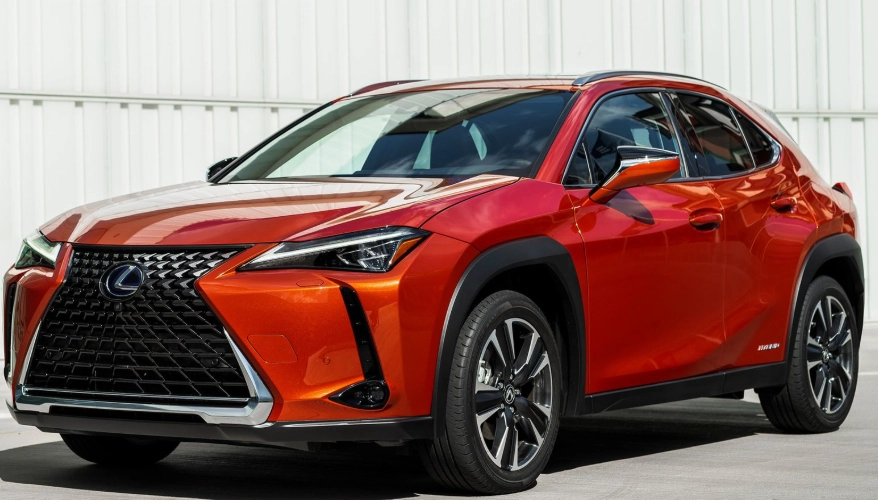
A Quick Personal Gripe: Some early hybrids had a grabby, unnatural feel to the brakes because of the regenerative system. It took some getting used to. The good news? Most manufacturers have smoothed this out dramatically. The braking in newer models feels completely normal now.
The Different Flavors of Hybrid: It's Not One-Size-Fits-All
Not all hybrid cars are created equal. The engineering philosophy differs, and your driving style will determine which type feels best. Here's the lowdown on the main architectures.
Parallel Hybrids (The Most Common Type)
This is the classic setup used by Toyota, Honda, Hyundai, and many others. Both the gas engine and the electric motor are connected to the wheels and can propel the car independently or together. Think of it like a bicycle with two riders who can pedal separately or in unison. The computer chooses the most efficient combo. Most of these are what we call "full" or "strong" hybrids, meaning they can move on electric power alone at low speeds for short distances.
Series Hybrids (Less Common, but Interesting)
Here, the gasoline engine's only job is to act as a generator to produce electricity. It never directly drives the wheels. That task is left solely to the electric motor(s). It's more like an electric car with its own onboard gas-powered charger. This setup can keep the engine running at its single most efficient speed, which is great for consistency. The Nissan e-Power system (sold in other markets) is a prime example of a series hybrid. It feels like a pure EV to drive because the motor is always doing the work.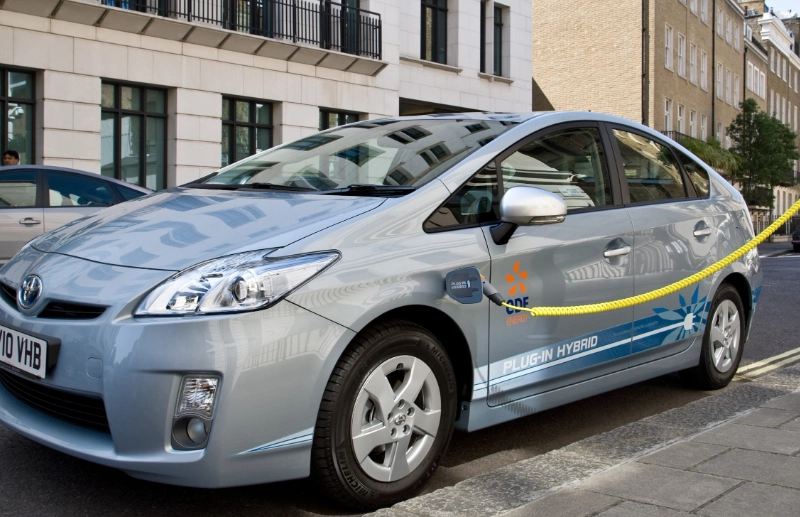
Plug-In Hybrid Electric Vehicles (PHEVs) – The Bridge to EVs
This is where things get more interesting for the tech-savvy. A PHEV has a much larger battery pack that you can and should plug in to recharge from an outlet or charger. This gives it a substantial electric-only range—anywhere from 20 to 50 miles on a charge. For many people, that covers their entire daily commute. You drive it like an EV until the battery is depleted, and then it seamlessly switches to operating like a regular (parallel) hybrid.
The upside? If you have a place to plug in nightly, you might go weeks without using a drop of gas for local trips. The downside? You're carrying the weight and cost of two full powertrains (a large battery/motor AND a gas engine with all its components).
My Two Cents: A PHEV makes phenomenal sense if your daily drive is under its electric range and you occasionally take long road trips. It's the ultimate "have your cake and eat it too" solution for now. But if you can't plug in regularly, you're just hauling around a heavy, expensive battery for no benefit, and your fuel economy might be worse than a standard hybrid.
To make this clearer, let's put the three main electrified options side-by-side.
| Feature | Standard Hybrid (HEV) | Plug-in Hybrid (PHEV) | Battery Electric Vehicle (BEV/EV) |
|---|---|---|---|
| Power Source | Gas Engine + Electric Motor (Self-Charging) | Gas Engine + Larger Electric Motor (Plug-In Charging) | Large Electric Motor(s) Only (Plug-In Charging) |
| Fuel | Gasoline Only | Gasoline & Electricity | Electricity Only |
| Electric-Only Range | 1-2 miles, low speed only | 20-50+ miles | 200-400+ miles |
| Refueling | Gas station only | Gas station & electrical outlet/charger | Electrical outlet/charger only |
| Best For... | Drivers who want significantly better fuel economy without changing habits or worrying about charging. | Drivers with a regular plug-in spot who want to do most daily driving on electricity but need gas for long trips. | Drivers with reliable home/work charging who primarily drive within the vehicle's range and embrace full electrification. |
| Example Models | Toyota Prius, Honda Accord Hybrid, Hyundai Elantra Hybrid | Toyota RAV4 Prime, Ford Escape PHEV, Jeep Wrangler 4xe | Tesla Model 3, Ford Mustang Mach-E, Hyundai Ioniq 5 |
That table should help clear up the biggest point of confusion. When most people just say "hybrid cars," they're talking about the first column: the standard, self-charging HEV.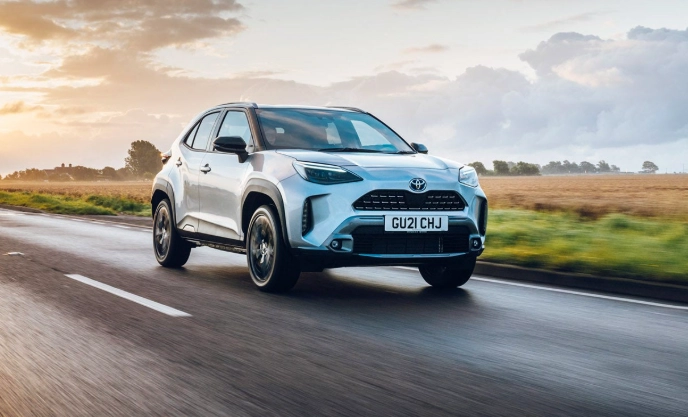
The Real-World Pros and Cons: No Sugarcoating
Alright, so the tech is clever. But what does it mean for you in the driveway? Let's break down the good, the bad, and the "it depends."
Why Hybrid Cars Are Seriously Appealing
Outstanding Fuel Economy: This is the headline act. Especially in city driving, where the electric motor does most of the heavy lifting, the MPG gains are staggering. We're talking 40, 50, even over 60 MPG in some models like the latest Prius. On the highway, the advantage narrows but is still significant. For a commuter stuck in traffic, the savings add up fast.
Lower Emissions: Burning less gas means emitting fewer greenhouse gases and local pollutants. While not zero-emission like an EV, a hybrid is a major step in the right direction for the environment. The U.S. Department of Energy's fueleconomy.gov site is a fantastic resource for comparing the environmental impact of different vehicles, including hybrids.
Smooth, Quiet Operation: That electric-only creeping and smooth engine restart make for a very refined driving experience in stop-and-go traffic. It's just… calm.
Proven Reliability and Low Maintenance (in some areas): Hybrid powertrains, particularly from Toyota and Honda, have a legendary reputation for going hundreds of thousands of miles with minimal issues. The electric motor has far fewer moving parts than a gas engine. The regenerative braking also means the traditional friction brakes are used less, so brake pads and rotors can last much longer—I've heard of owners going over 100,000 miles on the original pads.
The Potential Downsides and Things to Think About
The Upfront Cost (The Hybrid Premium): Hybrid technology adds complexity and cost. A hybrid version of a car is often $2,000 to $5,000 more than its gas-only sibling. You need to calculate how long it will take to recoup that cost in fuel savings. For a low-mileage driver, it might not make financial sense.
Performance Can Feel... Different: Don't expect sports car thrills. Most hybrids are tuned for efficiency, not neck-snapping acceleration. The continuously variable transmission (CVT) used in many models can make the engine drone at high RPMs under hard acceleration. Some people hate this sound. Newer models are better, but it's a common complaint.
The Battery Question: It's the elephant in the room. "How long does it last?" and "How much does it cost to replace?" are the top questions. Modern hybrid batteries are designed to last the life of the car. Most manufacturers offer 8-year/100,000-mile warranties on them. Failures outside of that are rare but not impossible. A replacement battery pack can cost $2,000-$4,000, but a growing industry of refurbishers offers much cheaper options. The fear is often overblown.
A Quick Reality Check: I've read countless forums and owner reports. Catastrophic, out-of-the-blue battery failure in a well-maintained hybrid is uncommon. Gradual capacity loss, leading to slightly reduced electric assist and MPG over 10+ years, is more typical. It's a concern, but not the deal-breaker many think.
Cargo Space Compromises: That battery pack has to go somewhere. In many sedans and SUVs, it eats into trunk space or removes the spare tire. Always check the actual cargo area before you buy.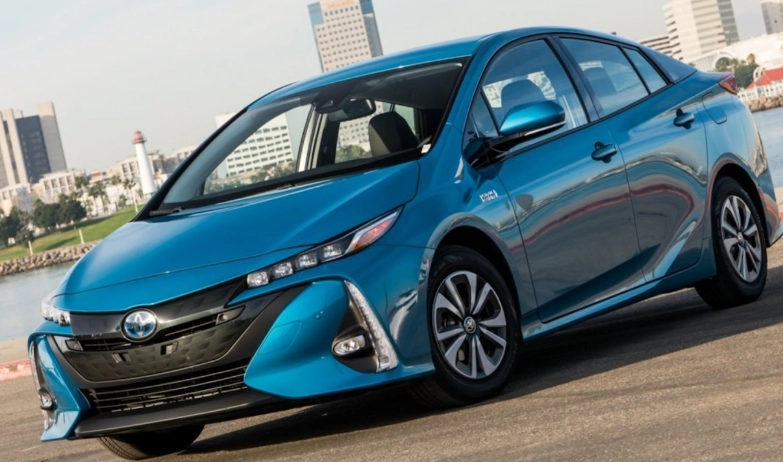
Costs, Savings, and the Long-Term Math
Let's talk money, because that's why most people consider hybrid cars in the first place. Is the math actually in your favor?
It depends entirely on three things: 1) The price of gas, 2) How many miles you drive per year, and 3) The type of driving you do.
Here's a simplified scenario: Imagine you're comparing a gas-only compact SUV that gets 28 MPG combined with its hybrid counterpart that gets 38 MPG. Gas is $3.50 per gallon. You drive 15,000 miles per year.
- Gas Car Annual Fuel Cost: (15,000 miles / 28 MPG) * $3.50 = $1,875
- Hybrid Car Annual Fuel Cost: (15,000 miles / 38 MPG) * $3.50 = $1,382
That's an annual saving of $493. If the hybrid costs $3,000 more upfront, it would take you just over 6 years of driving to break even on the fuel savings alone. If you drive more miles, or gas prices spike, the payback period shortens. If you drive less, it lengthens.
But wait, there's more to the equation. Some states offer tax credits or incentives for certain hybrids (especially PHEVs). You might also get a break on your insurance, though not always. Depreciation? Historically, reliable hybrids like the Prius have held their value exceptionally well, sometimes better than their gas counterparts. Consumer Reports does excellent long-term cost-of-ownership analyses that factor in depreciation, maintenance, and fuel, and they consistently find many hybrids to be among the cheapest vehicles to own over 5-10 years.
When I ran the numbers for my own situation (long commute, high gas prices), the hybrid made clear financial sense after about 4 years. But for my retired parents who putter around town in their old sedan, the premium would take over a decade to pay off. For them, it wasn't worth it.
Maintenance: Simpler in Some Ways, More Complex in Others
Routine maintenance on a hybrid is mostly the same as a regular car: oil changes, tire rotations, cabin air filters. However:
- Brakes: As mentioned, they last far longer due to regenerative braking.
- Oil Changes: The engine runs less, so some owners find they can go slightly longer between changes, but always follow the manufacturer's severe service schedule if you do lots of short trips.
- Battery Cooling System: The hybrid battery has its own cooling system that may need periodic maintenance.
- Specialist Knowledge: While any mechanic can do the basics, complex hybrid system diagnostics and repairs require a technician with specific training and tools. This means you're more tied to the dealership or a specialized independent shop.
The U.S. Environmental Protection Agency's Green Vehicle Guide is another great official resource for understanding the emissions and efficiency standards these vehicles meet.
Your Hybrid Buying Guide: What to Look For and Ask
Convinced a hybrid might be for you? Great. Here's your action plan for the dealership or private sale.
Key Questions to Ask Yourself (And the Seller)
- What's my primary use case? Is this a commuter car for heavy traffic (where hybrids shine), or a highway cruiser (where the advantage is smaller)? Your answer might steer you toward a specific type of hybrid.
- Can I charge at home? If yes, a PHEV becomes a very compelling option. If no, stick with a standard HEV.
- What's the real-world MPG, not just the sticker? Check owner forums on sites like Fuelly.com. The EPA number is a guide, but real drivers will tell you what to expect. Cold weather, aggressive driving, and using the heater/AC can all lower MPG.
- What is the remaining battery warranty? If you're looking at a used hybrid, this is crucial. Get the VIN and call a dealership for the warranty status.
- Has the hybrid system had any recalls or common issues? A quick search for the model year and "hybrid system recall" or "common problems" can save you headaches.
A Quick Checklist for a Test Drive
- Drive in the city. Experience the engine shutting off at stops and the electric launch.
- Accelerate onto a highway ramp. Listen to the engine note. Does the CVT drone bother you?
- Check the regenerative braking feel. Is it smooth and predictable?
- Open the trunk and fold the rear seats. Is the cargo space adequate for your needs?
- Play with the infotainment screen. Find the energy monitor—it's fascinating to watch the power flow in real-time.
Answering Your Burning Hybrid Car Questions
The Final Verdict: Who Are Hybrid Cars Really For?
After all this, where do we land? Hybrid cars aren't for everyone, but they are a brilliant solution for a huge slice of drivers.
You should seriously consider a hybrid if: You have a significant daily commute, especially in urban/suburban traffic. You want to reduce your fuel costs and environmental footprint but aren't ready or able to go fully electric due to charging concerns, budget, or driving patterns. You value a smooth, quiet driving experience in daily traffic. You plan to keep the car for many years to realize the full financial payback.
You might want to look elsewhere if: You drive very few miles annually. Your budget is extremely tight and the upfront premium is a deal-breaker. You primarily drive long highway distances at high speeds. You need to tow or regularly carry maximum cargo. You are passionate about performance driving and find efficient powertrains uninspiring.
The landscape of hybrid cars has evolved from a quirky choice (remember the early Prius jokes?) to a mainstream, sensible, and deeply polished technology. They represent a pragmatic, proven path to using less fuel and spending less money, without asking you to change your life. In a world of flashy EV headlines, that's a quiet superpower worth paying attention to.
Do your own math, take that test drive, and see if the hybrid life feels right. For millions of drivers around the world, it absolutely does.