Quick Guide
- What Are You Actually Working With? The Tools of the Trade
- Decoding the Code: What Is Your Car Trying to Say?
- The Real Diagnostic Process: It's More Than Just a Code
- Common Questions People Actually Ask (And The Real Answers)
- Looking Ahead: The Future of Auto Diagnostics
- Final Thoughts: Taking the First Step
Let's be honest. That little orange engine light popping up on your dashboard feels like a personal attack. Your stomach drops, your mind races through repair bill estimates, and you suddenly become an expert in hoping problems just go away. I've been there, staring at that light on my old truck, feeling completely powerless. That feeling of not knowing? It's the worst part. But what if I told you that the mystery is largely gone? That your car is actually trying to tell you what's wrong, in its own digital language? That's where the world of auto diagnostics comes in.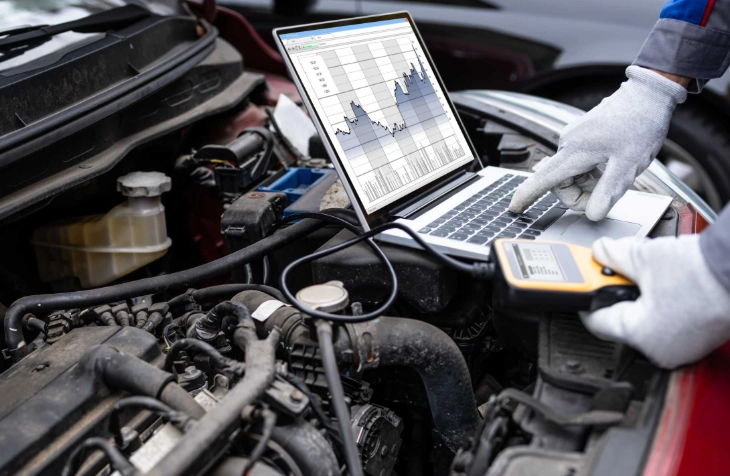
It's not just for mechanics in greasy overalls anymore. Modern auto diagnostics is a conversation between you and your car's computer. And with the right knowledge, you can understand a good chunk of that conversation yourself. This isn't about turning everyone into a master technician overnight. It's about demystifying the process, saving you money on unnecessary repairs, and giving you back a sense of control. Whether you're a curious DIYer or just someone who hates being in the dark when talking to a mechanic, understanding auto diagnostics is one of the most useful skills you can have for car ownership today.
Think of it this way: Your car's computer (the Engine Control Unit or ECU) is constantly monitoring dozens of sensors. When something falls outside normal parameters, it doesn't just turn on a light. It stores a detailed trouble code—a specific piece of data pointing to the general area of the issue. Auto diagnostics is the process of retrieving and interpreting that code and the live data surrounding it.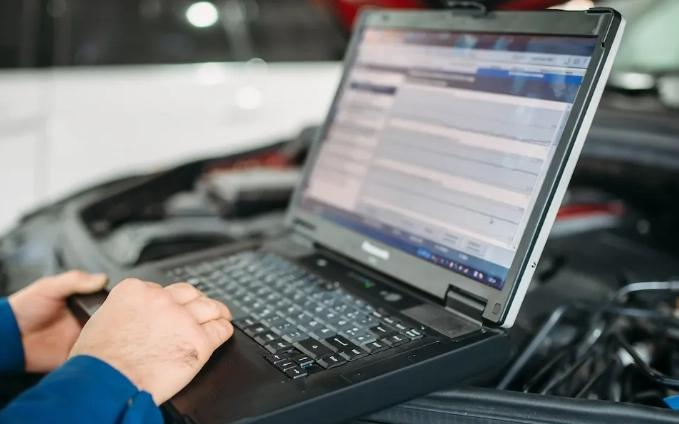
What Are You Actually Working With? The Tools of the Trade
So, what exactly is auto diagnostics? At its core, it's the process of interfacing with your vehicle's onboard computer systems to retrieve fault codes, view live sensor data, and sometimes even run tests on components. Since 1996, all cars sold in the US have been required to have a standardized system called OBD-II (On-Board Diagnostics, second generation). That little port under your dashboard, usually near the steering column? That's the gateway. The tool you plug into it is your translator.
The range of tools is massive, from a $20 Bluetooth dongle to a $10,000 professional scan tool. The key is matching the tool to your needs and skill level. Buying a pro-level scanner for occasional check engine light checks is overkill, like using a sledgehammer to crack a nut. But a basic code reader might leave you frustrated if you need more detail.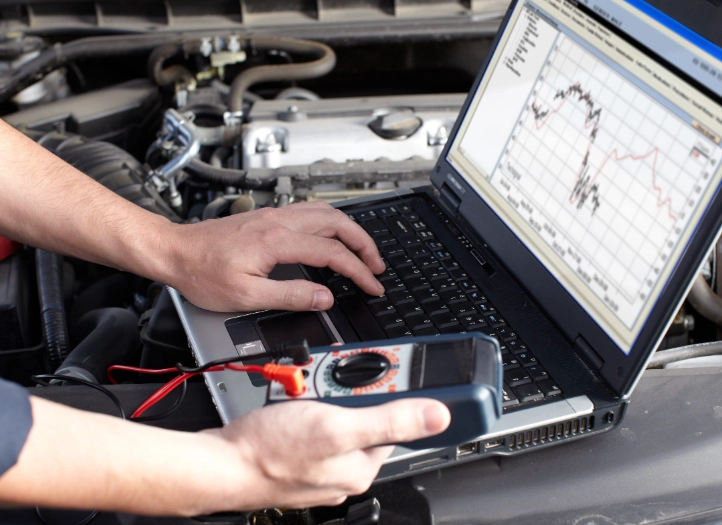
The Three Main Types of Diagnostic Tools
I like to break them down into three broad categories. This isn't a perfect science, but it helps make sense of the market.
| Tool Type | What It Does | Best For... | Price Range |
|---|---|---|---|
| Basic Code Reader | Reads and clears generic (P0xxx) OBD-II trouble codes. That's it. Shows the code (like P0300) and a brief definition. | The absolute beginner who just wants to know why the check engine light is on before going to a shop. It's a basic first step in auto diagnostics. | $20 - $80 |
| DIY Scan Tool / Bluetooth Adapter | Reads/clears codes PLUS views live data (RPM, coolant temp, fuel trim), freeze frame data, and sometimes manufacturer-specific codes. Connects to a smartphone app. | The savvy car owner who wants to monitor car health, get more detailed info, and maybe troubleshoot simple issues like a bad oxygen sensor. This is where home auto diagnostics gets powerful. | $30 - $150 |
| Professional Diagnostic Scanner | Everything above, plus bi-directional controls (activating components), advanced coding, programming keys, full system coverage (ABS, airbag, transmission), and detailed service procedures. | Professional mechanics, advanced hobbyists, or people with complex European cars. The depth of analysis here is on another level. | $500 - $10,000+ |
My personal journey started with a cheap Bluetooth adapter and a free app. I was amazed I could see my engine's temperature in real time or watch the fuel trims change. It felt like a superpower. But I quickly hit its limits when my Volkswagen threw an airbag code the cheap tool couldn't even see. That's when I learned the hard way about the difference between generic and manufacturer-specific codes.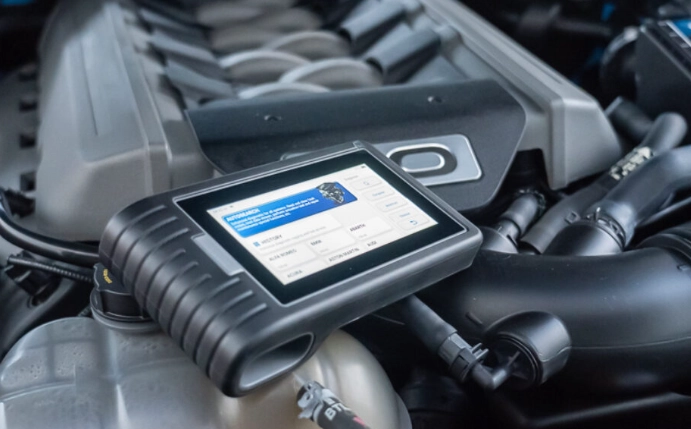
Pro Tip: If you're just starting out, a mid-range Bluetooth OBD2 adapter (look for brands like OBDLink or Veepeak) paired with a robust paid app like Torque Pro (Android) or EngineLink (iOS) is arguably the best value in auto diagnostics for a non-professional. You get 80% of the functionality for less than $100.
Decoding the Code: What Is Your Car Trying to Say?
Alright, you've plugged in your scanner. It spits out "P0420." Now what? A code is not a direct order to replace a part. It's a clue. A very specific clue. Understanding the structure of OBD-II codes is like learning the alphabet of your car's language.
The first character is a letter: P for Powertrain (engine, transmission), B for Body (airbags, windows), C for Chassis (ABS, stability control), and U for Network (communication between modules). The most common ones you'll see are P-codes. The next digit is a 0 or 1. A 0 means it's a generic code, standardized across all manufacturers. A 1 means it's a manufacturer-specific code, which is where your basic reader might fail and you need more advanced auto diagnostics. The third digit points to the subsystem: 1 for fuel/air, 2 for injector circuit, 3 for ignition, etc. The last two digits specify the exact fault.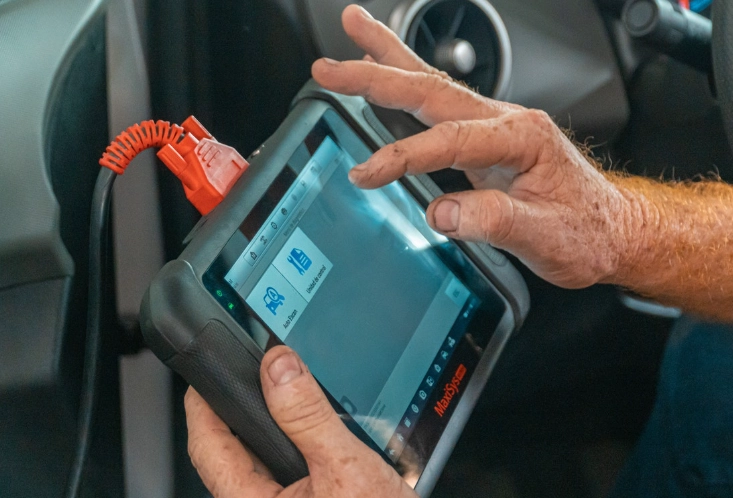
Let's look at some common ones and, more importantly, what they might mean (but often don't mean directly).
- P0300 – Random/Multiple Cylinder Misfire Detected: The classic "shaking car" code. It could be bad spark plugs, ignition coils, a fuel injector, a vacuum leak, or even low fuel pressure. The code tells you the symptom (misfire), not the cause.
- P0420 – Catalyst System Efficiency Below Threshold (Bank 1): Often labeled as "bad catalytic converter." And while that's a possible cause, it's frequently triggered by a failing oxygen sensor before the cat, or even an exhaust leak. Replacing a $1000 catalytic converter for a $80 sensor is a painful mistake.
- P0171 / P0174 – System Too Lean (Bank 1 or 2): The engine is detecting too much air or not enough fuel. Causes range from a dirty mass airflow sensor, a vacuum hose that's popped off (a very common, cheap fix), a weak fuel pump, or a leaky intake manifold gasket.
See the pattern? The code narrows down the playing field dramatically, but it rarely points to one single culprit.
A Critical Warning: Never, ever just clear a code and hope for the best without investigating. Well, you can, but it's like taking the batteries out of a smoke alarm. The problem is still there. Clear codes only after you believe you've fixed the issue, to see if it comes back. Also, some codes (especially emission-related ones) need a specific "drive cycle" to be cleared from the computer's readiness monitors, which is important if you're about to go for a state emissions test. The U.S. Environmental Protection Agency (EPA) provides guidelines on these OBD systems, as they are fundamentally an emissions control technology.
The Real Diagnostic Process: It's More Than Just a Code
This is where the true art and science of professional auto diagnostics separates itself from just code reading. A good mechanic—or a diligent DIYer—uses the code as a starting point for a logical diagnostic procedure. Here’s a simplified version of that thought process.
- Retrieve the Code & Freeze Frame Data: Get the code. Then, look at the "freeze frame." This is a snapshot of the engine conditions (speed, load, temperature) the moment the code was set. Was the engine cold or hot? Was the car idling or at highway speed? This context is gold.
- Inspect Visually: Pop the hood. Look for obvious issues: disconnected hoses, cracked wiring, loose connectors, leaks. You'd be surprised how many "diagnoses" are solved right here. I once spent an hour diagnosing a rough idle only to find a mouse had chewed through a vacuum line. The auto diagnostics tool confirmed the lean condition, but my eyes found the real cause.
- View Live Data: This is the most powerful step for a home user. With the engine running, you can watch sensor values in real time. Is the oxygen sensor switching rapidly? Is the coolant temperature sensor reading -40°C (a classic sign it's failed)? Is the fuel trim massively positive? Comparing live data to known good values helps pinpoint faulty sensors.
- Perform Component Tests: Advanced scanners can do "bi-directional controls" or "active tests." This means you can command the fuel pump to turn on, cycle the cooling fan, or fire a specific injector from the driver's seat. It's a direct test of the component and its circuit.
- Follow a Flowchart: For complex issues, professionals use factory service information that provides step-by-step diagnostic trees. "If voltage at pin 3 is above 4.5V, proceed to step 5. If below, replace sensor." This systematic approach eliminates guesswork.
The goal of a thorough auto diagnostics session isn't just to find a problem, but to find the root cause of the problem. Replacing a blown fuse without finding out why it blew is a waste of time and money.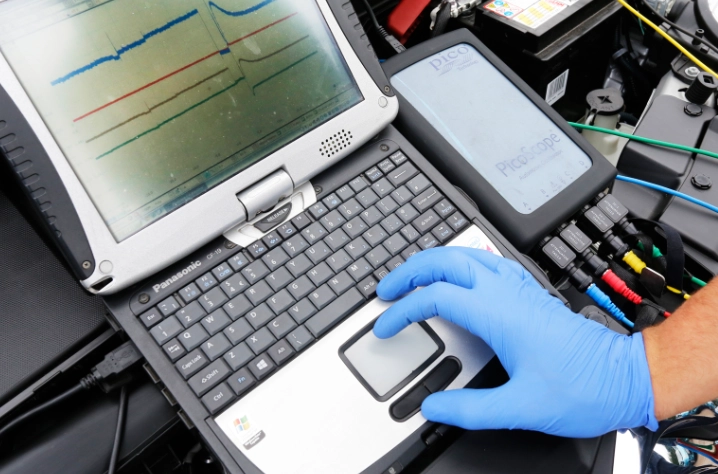
Common Questions People Actually Ask (And The Real Answers)
Let's cut through the marketing and forum myths. Here are the questions I get asked most often, answered plainly.
Is it worth buying my own diagnostic tool?
If you own more than one car, like to understand how things work, or have an older car that's prone to issues, then absolutely. A $50-100 investment can pay for itself in one tow truck fee or one unnecessary repair you avoided. It gives you concrete information to discuss with a mechanic, preventing the "upsell" on services you might not need. For the casual driver who leases new cars under full warranty, probably not.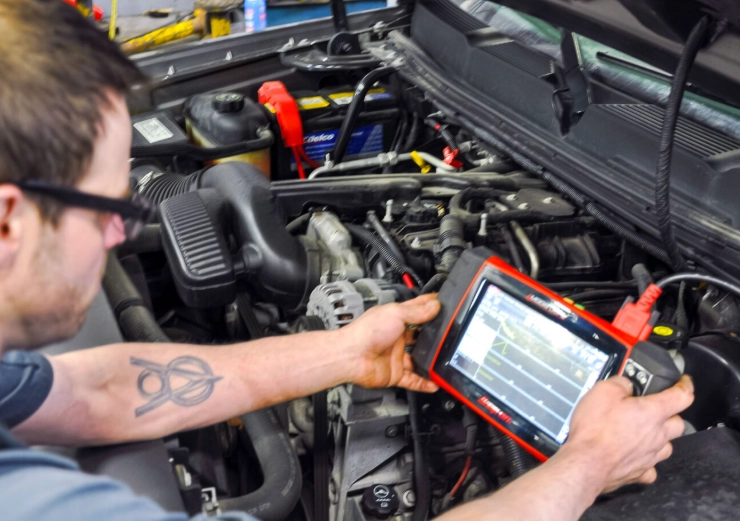
Can a diagnostic scanner tell me exactly which part to replace?
No. And any tool advertisement that claims this is being dishonest. It gives you a direction, not a destination. It tells you the "what" (e.g., oxygen sensor circuit slow response), but you often still need to figure out the "why" (bad sensor, wiring issue, exhaust leak, PCM fault). This is the most common misconception in auto diagnostics.
Will clearing the code make my car pass an emissions test?
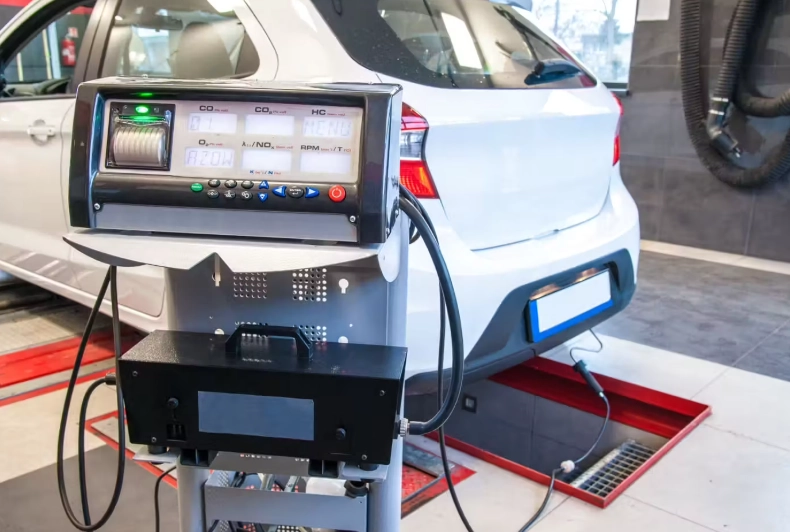
Not immediately, and this is a big one. When you clear codes, you also reset the "monitors"—the car's self-checks. An emissions testing machine will see these monitors as "not ready" and will fail you instantly, even with no light on. The car needs to complete a specific drive cycle, which can take anywhere from 50 to 100 miles of mixed driving, to run all its tests and set the monitors to "ready." Don't clear codes right before your test.
Are all OBD2 scanners the same?
Good grief, no. This is like asking if all knives are the same. The physical plug is standardized, but the software, protocol support, speed, and depth of access vary wildly. A cheap dongle might only read generic P-codes slowly. A better tool will access ABS, airbag, and transmission modules, read manufacturer-specific codes, and display data much faster. For European cars (VW, BMW, Mercedes), specialized tools or software (like VCDS for VW) are almost mandatory for anything beyond basic engine codes.
Can I damage my car by using a scanner?
Just reading data? Virtually impossible. You're in "listen-only" mode. Where you can get into trouble is with the "clear codes" function (if you clear them before diagnosing properly) or, on advanced tools, with the bi-directional controls. Telling a transmission solenoid to engage while the car is in gear could cause a jerk, for example. Always be sure you understand what a function does before using it. Stick to code reading and live data at first.
Bottom Line: Your diagnostic tool is a source of information, not a mechanic in a box. Its value is proportional to your willingness to learn and think logically about what the data means.
Looking Ahead: The Future of Auto Diagnostics
This field isn't standing still. The cars of today and tomorrow are changing the game. Telematics is huge—your car is already transmitting diagnostic data to the manufacturer via built-in cellular connections. They might know about a fault before you do and schedule a service appointment automatically. Remote diagnostics is becoming a real thing, where a technician can analyze your car's data stream over the internet.
Electric vehicles (EVs) have a completely different diagnostic landscape. The focus shifts from ignition timing and fuel trim to battery cell balancing, inverter performance, and high-voltage system isolation. The principles of system monitoring and fault coding are the same, but the specifics are a new world. The Society of Automotive Engineers (SAE International) is constantly working on new standards for this evolving technology.
Artificial intelligence is also creeping in. Some newer professional tools can analyze live data patterns and suggest the most probable cause based on a database of millions of repairs. It's not perfect, but it's another tool in the box.
The core idea remains: the car is talking. We're just getting better and better at listening.
Final Thoughts: Taking the First Step
Don't let the complexity scare you off. Start simple. Buy a basic OBD2 Bluetooth adapter. Download a reputable app. Plug it in on a Saturday morning when nothing is wrong. Just look at the live data. See what normal looks like for your car. Watch the coolant temp climb from cold to operating temperature. See how the short-term fuel trim fluctuates at idle.
That familiarity is your foundation. The next time that dreaded light comes on, you won't feel panic. You'll feel curiosity. You'll have a starting point. You might still need to take it to a professional, but you'll go in armed with information. You'll be able to say, "The code is P0171, and I noticed the long-term fuel trim is at +25% at idle. Can we check for vacuum leaks first?" That changes the entire dynamic.
The true goal of learning auto diagnostics isn't to fix everything yourself. It's to remove the fear of the unknown and to become an informed partner in maintaining your vehicle.
Auto diagnostics has saved me hundreds, maybe thousands of dollars over the years. More importantly, it's saved me countless hours of worry and frustration. That little glowing light on the dash doesn't have to be a symbol of impending doom. It can be the start of a puzzle. And with the tools and knowledge available today, it's a puzzle more of us are equipped to solve, or at least understand. Grab a scanner, pop the hood, and start the conversation with your car. You might be surprised at what it has to say.
Remember: For major safety system issues (airbag, ABS, brake warnings) or if you are ever unsure, consulting a professional mechanic is always the safest choice. Resources like the National Highway Traffic Safety Administration (NHTSA) website are also invaluable for checking recall notices related to any persistent issues you might be diagnosing.