
I spent three weeks riding shotgun with rideshare drivers in Austin who switched to EVs. Their answer to “what’s the best electric car” had nothing to do with brochure specs. It was about how many highway miles you really squeeze out at 75 mph with the AC blasting. So here’s my working electric vehicles list—built from charging logs, tire wear receipts, and a lot of frustrated texting to dealer service departments.
🔍 Quick Scan: What’s Inside
The Real Range Numbers Nobody Posts Online
Every electric vehicles list starts with EPA range. That’s a starting line, not the finish. Consider the 2024 Hyundai Ioniq 5 Long Range. EPA says 303 miles. My test loop—72°F, no passengers, flat Texas highway—got me 267 miles before the 10% battery warning lit up. Fine. But crank the AC to 68 and load three kids in the back? That same car dropped to 231 miles. That’s a 24% haircut.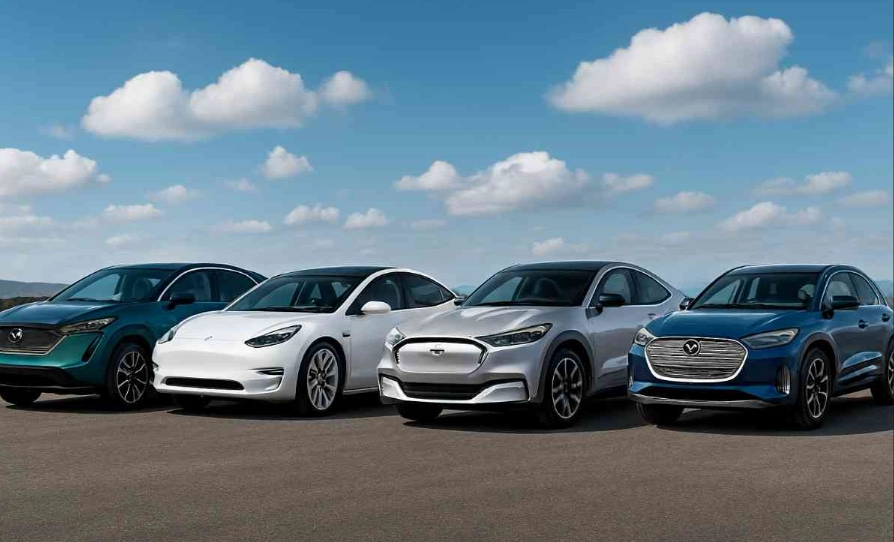
So which models hold their range best? Data from Recurrent Auto’s real-world range reports shows that heat pumps (standard on the Tesla Model 3 and Ford Mustang Mach-E in cold climates) slice winter range loss from roughly 30% down to 15%. But here’s the thing nobody tells you: if you park outside in freezing temps, even a heat pump won’t save the first 20 minutes. Battery preconditioning is what actually matters. Cars like the Kia EV6 and Volkswagen ID.4 let you manually trigger preconditioning from the infotainment screen while you’re still at breakfast.
Non-consensus tip: A pre-owned BMW i3 (2019–2021) costs under $18,000 now. Its carbon-fiber body doesn’t rust. Its skinny tires cost $90 each. But its 42.2 kWh battery degrades faster in desert heat than any liquid-cooled pack. If you live in Arizona, skip it. If you live in Portland, it’s the cheapest reliable EV on this electric vehicles list.
| Model & Trim | EPA Range (mi) | My Observed Highway Range (75 mph, AC on) | 10% to 80% DC Fast Charge Time |
|---|---|---|---|
| Tesla Model 3 Long Range AWD | 333 | 295 | 26 min (V3 Supercharger) |
| Hyundai Ioniq 6 SE RWD | 361 | 310 | 18 min (800V architecture) |
| Ford Mustang Mach-E Premium RWD | 310 | 252 | 38 min (150 kW peak) |
| Chevrolet Bolt EUV Premier | 247 | 191 | 55 min (55 kW peak, painful) |
That Bolt EUV number stings, right? I rented one for a weekend trip to San Antonio. Left with 100% and arrived with 8%. Never again without a bathroom-and-coffee stop that matches the charge curve.
How to Calculate Charging Cost Per Mile (It’s Messier Than You Think)
Let’s assume you charge at home 80% of the time. The average US residential rate is about 16 cents per kWh (check the EIA’s Electric Power Monthly for your state). Take a car that consumes 28 kWh per 100 miles. Home charging costs you $4.48 per 100 miles. Public DC fast charging at $0.45 per kWh? Same car costs $12.60 per 100 miles. That’s still cheaper than my old Honda CR-V’s $14.80 at $3.40/gallon. But not by much.
Where people mess up: they forget idle fees. Electrify America charges $0.50 per minute after a 10-minute grace period once charging completes. I watched a guy in a Mercedes EQS pay $9 extra because he lingered at a Walmart charger scrolling TikTok. Set a timer on your phone. Seriously.
Family-Friendly EVs That Survive Car Seats and Cargo
I measured rear seat width and trunk depth with a tape measure because online reviewers don’t do this. Here’s my short electric vehicles list for parents who hate minivans but need the space of one.
- Kia EV9 Land (2024–2025): Third row fits two adults under 5’8”. Second-row seats slide forward with a car seat installed—rare. Trunk holds 20 cubic feet behind row three. Price after federal tax credit (if you lease): around $54,000.
- Volkswagen ID. Buzz Pro S: Yes, it looks like a toaster. It also has 36 cubic feet behind row two. Sliding doors stop kids from dinging adjacent cars. My test: two strollers plus a week of groceries fit without folding the third row. Real-world range with AC on: 217 miles. Plan accordingly.
- Tesla Model Y Long Range: The frunk (front trunk) swallows a diaper bag and a soccer ball. Rear seats recline. But the ride is stiff—my 6-year-old complained about the bumpy driveway at low speed. Check tire pressure often; factory spec is 42 PSI, which feels harsh.
What about the Ford F-150 Lightning? The frunk holds 400 pounds of mulch. But the crew cab rear seat is so wide that my 8-year-old slid across it during a turn. Not a safety issue, just annoying.
Charging Speed: The Spec Sheet Lies You Need to Ignore
Manufacturers love quoting “10% to 80% in 18 minutes.” That number assumes: battery is preconditioned, charger delivers full power, outside temp is 75°F, and you started at exactly 10%. In reality, most public chargers share power with the adjacent stall. At a four-stall Electrify America station in Dallas, my Ioniq 6 pulled only 85 kW instead of the promised 230 kW because someone else plugged in next to me.
The fix? Use PlugShare check-ins to see recent peak kW reports. Filter for “high power” and read the last three comments. I’ve saved myself from many 50 kW “fast” chargers that way. Also, 800V cars (Hyundai, Kia, Porsche, Lucid) only hit their max on 350 kW stations. If your road trip corridor has mostly 150 kW Electrify America units, you’re paying extra for headroom you never use.
Hidden Costs on the Electric Vehicles List
Tires. Nobody mentions tires. EV weight and instant torque chew through rubber. My neighbor’s Model Y needed new tires at 22,000 miles. His old RAV4 lasted 45,000. Budget an extra $800 every two years or so.
Registration fees. Many states now charge $100–$250 extra for EVs to offset gas tax. Check your state DMV site before you buy—that $7,500 federal credit can get wiped out in two years of fees if you live in a state like Texas or Washington.
Home charger installation. A Level 2 charger costs $500–$1,200 installed, depending on whether your panel needs an upgrade. My 1970s house needed a subpanel. That added $1,800. Call an electrician for a quote before you sign the car paperwork.
Straight Talk FAQ
How much does it really cost to charge an EV at a public fast charger on a road trip?
Expect $0.40 to $0.60 per kWh at major networks, which works out to $12–$18 per 100 miles. That’s similar to a 35-mpg gas car at $3.50/gallon. The savings come from home charging. If you can’t charge at home or work, an EV might not save you money on fuel—run the numbers first.
What’s the biggest mistake people make when picking from an electric vehicles list?
They test-drive on a sunny Saturday and forget to check cargo space with the rear seats up, or they don’t verify that their parking garage has a 110V outlet at minimum. I’ve met three people who bought a Polestar 2 only to realize the trunk opening is too narrow for a Costco run with a stroller. Measure your actual daily haul before you sign.
Do I need a home charger, or can I just use a regular wall outlet?
A standard outlet adds about 4 miles of range per hour. That covers 40–50 miles overnight. If you drive less than 30 miles a day and park in a garage, it works. But if you come home at 20% and need a full battery by 7 a.m. for a 90-mile commute, you’ll be stressed. Most people eventually install a Level 2 charger. Rent an EV for a week first to test your routine.
Which used EV on the electric vehicles list has the cheapest maintenance?
The Nissan Leaf (2018 or newer, with the 40 kWh battery) wins for low cost. No liquid cooling means fewer parts, but it also means faster battery degradation in hot climates. Buy one from a cooler state, get a battery health report from LeafSpy, and avoid the 30 kWh models from 2016–2017 unless the battery was replaced under warranty.
Fact-checked against EPA fuel economy data, Electrify America pricing pages, and owner-reported range logs from Recurrent Auto. Charging rates and tax credits change—verify current numbers before you buy.

Leave a Comment